


 English
 Español
 Français
Home / News / Industry News / Biological Indicators for Sterilization: A Practical Selection and Use Guide
News


Biological Indicators for Sterilization: A Practical Selection and Use Guide
 2026.10.21
 Industry News
A positive biological indicator on an implant load is not a paperwork problem. It stops release, forces quarantine, and triggers a review of the sterilizer, load configuration, packaging, and operator practice. That is why a biological indicator (BI) belongs at the centre of sterilization monitoring: it is the routine test that comes closest to asking whether the process actually killed resistant spores, not merely whether the chamber reached a setpoint.
Content
- 1 What a Biological Indicator Proves — and What It Does Not
- 2 Read the Label Like a Buyer, Not Just a Technician
- 3 Match the Organism and Standard to the Sterilization Method
- 4 Where BIs Fit in the CSSD Workflow
- 5 Incubation, Storage, and Failure Response
- 6 A Procurement Checklist That Reduces Risk
- 7 Frequently Asked Questions
What a Biological Indicator Proves — and What It Does Not
A BI is a carrier inoculated with a known population of highly resistant bacterial spores. For steam, the usual challenge organism is Geobacillus stearothermophilus; for ethylene oxide, Bacillus atrophaeus. After exposure, the carrier is incubated with growth medium. Growth means spores survived; no growth means the process achieved the defined kill under the test conditions. The result is binary, but the science behind it is not: population, D-value, carrier material, packaging, and incubation conditions all shape what that pass or fail means.
A BI does not measure every sterilization parameter. It does not replace chamber pressure, temperature, or gas concentration records, and it does not prove that cleaning was effective. Chemical indicators change colour for a different reason: they show exposure to one or more process variables, not microbial lethality. According to ISO 14161, BIs should be used alongside physical monitors and chemical indicators, not as a substitute for either.
 Self-Contained Biological Indicators for Sterilization MonitoringSelf-contained ATCC 7953 spore indicators with integrated design and 30-minute fluorescent readout for validated sterilization monitoring alongside physical and chemical indicators.View Product →
Read the Label Like a Buyer, Not Just a Technician
Two BIs can look identical and behave differently. The label should state the organism, population (often 105 to 106 CFU), D-value at the specified temperature or condition, lot number, expiry date, and intended sterilization process. A D-value is the exposure time needed for a 1-log reduction under stated conditions. A higher D-value means greater resistance, not automatically a better product. The right BI is the one validated for your cycle and matched to the relevant part of ISO 11138.
Self-contained BIs place the spore carrier, growth medium, and indicator system in one device. Strip BIs require separate recovery and incubation, which adds handling steps but can suit specific validation work. Rapid-readout systems shorten incubation time, but the result is only useful if the reader, medium, and BI are validated together and the instructions for use are followed exactly.
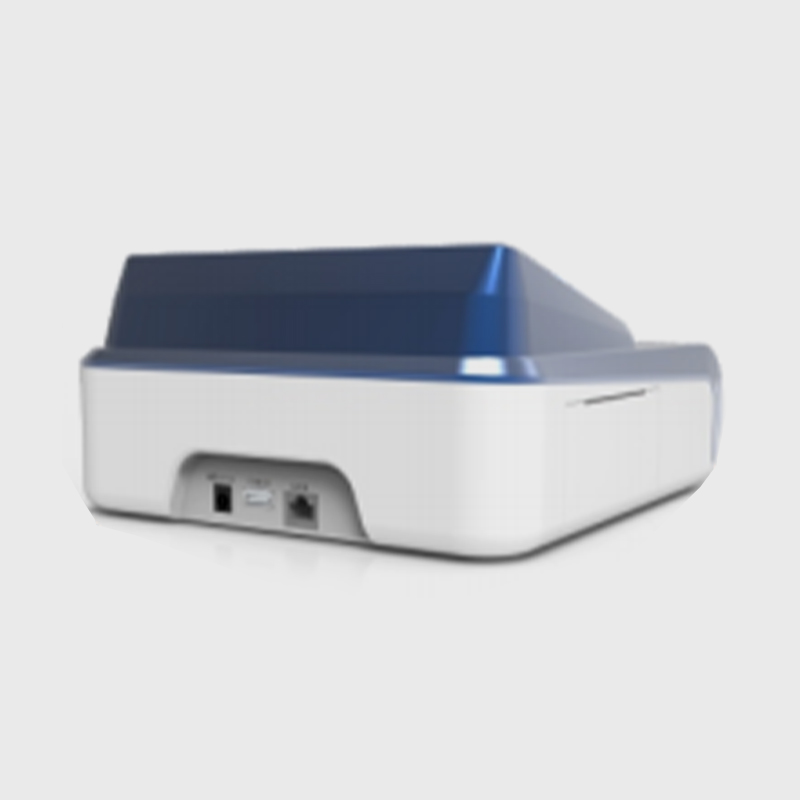 Automatic Biological Reader for Indicator Culture and TraceabilityTouchscreen reader for compatible biological indicators, with 30–180 minute culture times, automated result storage, USB/Ethernet export, and traceability entry.View Product →
Match the Organism and Standard to the Sterilization Method
The most common purchasing error is choosing a BI by price or shelf life before confirming that it is valid for the sterilization method. The organism, carrier, population, and resistance must match the process. Table 1 gives common pairings; always confirm the exact ISO 11138 part and the manufacturer's instructions for use.
| Sterilization process | Common challenge organism | Standard reference | Buyer check |
|---|---|---|---|
| Steam (moist heat) | Geobacillus stearothermophilus | ISO 11138-3 | D-value at 121°C, population, carrier format |
| Ethylene oxide (EO) | Bacillus atrophaeus | ISO 11138-2 | EO resistance, carrier, packaging compatibility |
| Hydrogen peroxide | Geobacillus stearothermophilus | ISO 11138-6 | Cycle compatibility, material effects, readout system |
| Dry heat | Bacillus atrophaeus | ISO 11138-4 | Temperature-specific resistance, carrier stability |
| Low-temperature steam and formaldehyde | Geobacillus stearothermophilus | ISO 11138-5 | Process-specific validation, incubation conditions |
Use a process challenge device (PCD) when the load creates a worse-case path for steam or gas penetration. The PCD should be validated for the load type, not assembled from random packaging. For routine release, the BI result, chemical indicator, physical parameters, and load records should tell a consistent story. If they do not, treat the load as unresolved.
Where BIs Fit in the CSSD Workflow
In a sterile processing department, BIs sit after cleaning, inspection, packaging, and sterilization. They are not a cleaning test. Blood, biofilm, or salt residue can protect organisms and cause a valid BI challenge to fail for the wrong reason. A BI inside a PCD is therefore only one part of the release decision.
AAMI ST79 recommends a BI for every steam load containing implants and at least weekly biological monitoring for steam sterilization; local policy, accreditation requirements, and implant release rules may be stricter. EO and low-temperature processes have their own monitoring requirements. Write the release logic before the first load: who may quarantine, who reviews a positive result, what documentation is required, and when a load can be reprocessed.
 Batch Control Helix Test Kit for Sterilization PenetrationLumen-type process challenge device with waterproof, self-adhesive design for checking sterilant penetration in tubular instruments and supporting batch release.View Product →
Incubation, Storage, and Failure Response
Most false alarms start outside the sterilizer. Store BIs sealed and dry, at the temperature range stated in the instructions for use. Do not use expired product, and record the lot number on the load record. Incubate for the full period; conventional systems often require 24 to 48 hours, while rapid-readout systems are shorter but only valid with the matching reader and medium.
- Run positive and negative controls at the frequency stated by the manufacturer and your laboratory policy.
- Check that the BI is compatible with the cycle, packaging, and PCD.
- Confirm the incubator temperature and calibration before blaming the sterilizer.
- For a positive result, quarantine the load, review physical records, check the BI lot and controls, and repeat the challenge before release.
- For implant loads, do not release until the BI is negative unless a documented emergency-release policy using chemical indicators and physical monitors is followed.
A Procurement Checklist That Reduces Risk
Purchasing a BI is a technical decision, not a stationery order. Ask for the ISO 11138 part, organism, population range, D-value at the stated condition, carrier material, shelf life, storage limits, lot traceability, certificate of analysis, and reader compatibility. If the supplier cannot explain how the BI was validated for your cycle, the lowest price is not a saving.
- Match the BI to the sterilization method and the load type.
- Confirm population, D-value, and carrier against the standard and your validation report.
- Check that the BI fits the PCD and the incubator or reader you actually use.
- Review lot release documents, expiry dating, and transport conditions.
- Train staff on activation, incubation, reading time, and documentation.
- Agree on a failure investigation pathway before the first positive result.
Eray Medical Technology (Nantong) Co., LTD., is a medical device manufacturing enterprise integrating research and development, production, and sales. The company is located in Rudong Economic Development Zone, adjacent to Shanghai, with convenient transportation and developed information. As a professional medical device manufacturer and medical consumables factory, the company covers an area of 70 mu, with a construction area of 20,310 square meters. It has an ISO Class 8 cleanroom, an ISO Class 7 microbiological laboratory, and a partial ISO Class 6 physical and chemical laboratory. Eray has established a comprehensive quality control system that encompasses the entire production process, including testing and traceability, from the ISO Class 8 cleanroom to a partial ISO Class 6 physical and chemical laboratory, ensuring that every customer receives trustworthy products.
For CSSD teams reviewing biological indicators, sterilization consumables, or a combined equipment and monitoring programme, contact our team with your cycle type, load profile, and current release policy.
Frequently Asked Questions
Q1. How often should a biological indicator be run?
For steam loads containing implants, every load is common practice under AAMI ST79, with at least weekly monitoring for other steam loads. Follow your national standard, accreditation rules, and manufacturer instructions.
Q2. Why is Geobacillus stearothermophilus used for steam?
Its spores are highly resistant to moist heat, so they provide a meaningful challenge to the steam cycle. The exact strain and resistance must match the relevant ISO 11138 part.
Q3. Can one BI be used for steam and EO?
No. Steam and EO use different challenge organisms and resistance profiles. A steam BI is not a valid EO monitor, and an EO BI is not a steam monitor.
Q4. What should happen after a positive BI?
Quarantine the load, review physical and chemical records, check controls and the BI lot, and investigate the sterilizer and load configuration. Do not release the load until the cause is resolved and the repeat result is acceptable.
Q5. Do BIs replace chemical indicators?
No. Chemical indicators show exposure to process variables; BIs challenge microbial lethality. Both are needed, together with physical monitoring and load records.
Q6. How should BIs be stored?
Keep them sealed and dry at the temperature range in the instructions for use. Do not freeze or refrigerate unless the manufacturer specifies it, and never use expired product.
Related Products

If you are interested in our products, please consult us
CONTACT DETAILS
- Address : 116 Weihe Road, Rudong County Economic Development Zone, Nantong City, Jiangsu Province,China
- TEL: : +86-18362400158
- Email: : jayne@eraymedtech.com
PRODUCTS
NEWS CENTER
MOBILE TERMINAL
Copyright © 2025 Eray Medical Technology (Nantong) Co., Ltd.
All Rights Reserved. The information provided on this website is intended for use only in countries and jurisdictions outside of the People's Republic of China.
 Medical Devices Manufacturers
Medical Consumables Factory
 CONTACT US
