


 English
 Español
 Français

What Do Color Changes in Sterilization Indicators Really Mean?
 2026.05.14
 Industry News
Quick Answer
A color change in a sterilization indicator means that the item has been exposed to the sterilization process — but it does not automatically confirm that sterilization was successful. Chemical indicators change color when specific sterilizing conditions (temperature, time, steam saturation, or EO gas concentration) are met. Understanding which indicator class you are using, and what its color endpoint represents, is essential to interpreting results correctly and maintaining patient or product safety.
Content
- 1 Why Color Changes in Sterilization Indicators Are Not All Created Equal
- 2 The Six ISO Classes of Chemical Sterilization Indicators — What Each Color Change Means
- 3 Steam vs EO Sterilization: How the Color Change Chemistry Differs
- 4 What a Partial Color Change — or No Change — Actually Signals
- 5 How to Read Autoclave Indicator Tape Correctly — and What It Cannot Tell You
- 6 Building a Reliable Sterilization Monitoring Strategy with the Right Indicator Combination
- 7 What to Look for When Sourcing Medical Sterilization Consumables
- 8 About Eray Medical Technology — Professional Sterilization Indicators Manufacturer
- 9 Frequently Asked Questions
Why Color Changes in Sterilization Indicators Are Not All Created Equal
This is the point that trips up even experienced sterile processing technicians. A color change on a sterilization indicator confirms exposure — not sterility. The distinction matters enormously in clinical and laboratory settings where releasing a load based on a misread indicator can result in infection risk or product failure.
Chemical indicators used across medical sterilization consumables are classified by ISO 11140-1 into six classes, each responding to a different combination of sterilization parameters. A Class 1 process indicator — like autoclave indicator tape — simply confirms that a package went through a sterilizer. A Class 5 integrating indicator, by contrast, reacts to all critical parameters of the sterilization cycle (time, temperature, and steam quality) and provides a far more meaningful result.
Understanding which class your indicator belongs to determines how to interpret the color endpoint — and what action to take when a result is unclear or unexpected.
The Six ISO Classes of Chemical Sterilization Indicators — What Each Color Change Means
Each class of sterilization indicators consumables is designed with a specific informational purpose. Here is a clear breakdown of what a color change at each level actually tells you:
| Class | Type | What Color Change Confirms | Sterility Assurance Level |
|---|---|---|---|
| Class 1 | Process Indicator | Item was exposed to sterilization process | Low — exposure only |
| Class 2 | Specific-Use Indicator | Used in Bowie-Dick tests; verifies steam penetration in prevacuum cycles | Process-specific |
| Class 3 | Single-Variable Indicator | One critical variable (e.g., temperature) reached stated value | Moderate |
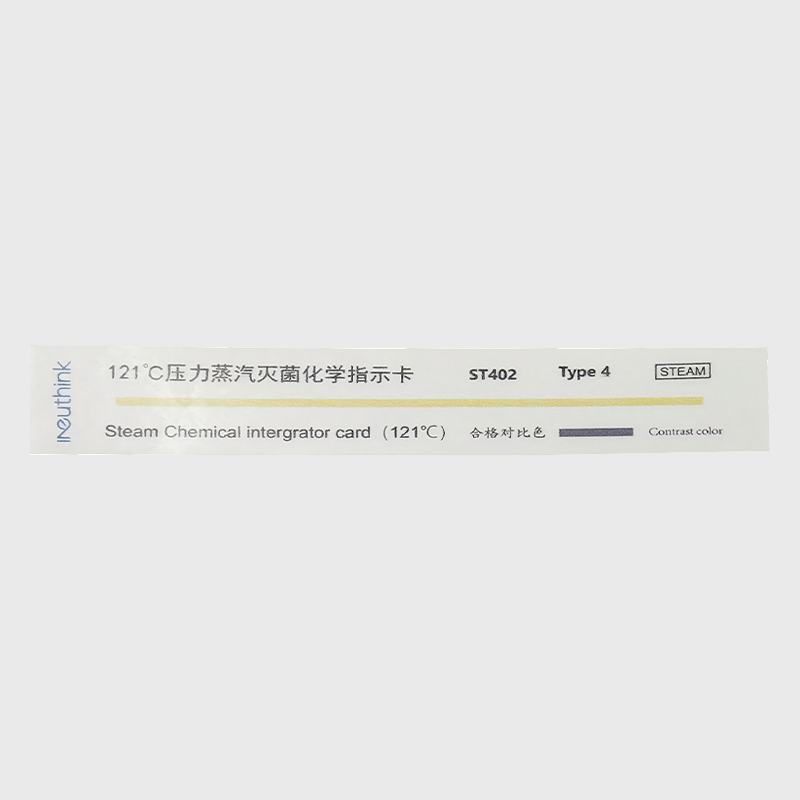
| Class 4 | Multi-Variable Indicator | Two or more critical variables reached stated values | Moderate-High |
| Class 5 | Integrating Indicator | All critical variables met across full cycle duration; correlates with biological indicator performance | Highest among chemical indicators |
| Class 6 | Emulating Indicator | All critical variables met for a specific cycle (cycle-specific verification) | High — cycle-specific |
In practical terms, Class 5 sterilization indicators offer the highest confidence among purely chemical devices. When a Class 5 indicator achieves its full color endpoint, it has responded to the cumulative effect of time, temperature, and steam quality — the same variables that a biological indicator (BI) tests microbiologically. This is why Class 5 integrating indicators are frequently used alongside or as interim substitutes for BIs in routine monitoring protocols.
Steam vs EO Sterilization: How the Color Change Chemistry Differs
Not all sterilization processes use the same agent — and the chemical indicator formulation must match the method. Using a steam sterilization indicator strip in an ethylene oxide (EO) cycle will not produce a meaningful result, and vice versa. Here is how the color change mechanisms differ between the two most common methods:
Steam Sterilization Indicator Strips
Steam (autoclave) indicators use dyes that react to the combination of saturated steam, temperature (typically 121°C or 134°C), and time. The ink formulation is heat-labile and steam-dependent — dry heat alone will not fully activate them.
A properly processed steam sterilization indicator strip will shift from its starting color (often beige, yellow, or pale) to a clearly defined endpoint color (typically dark brown or black). A partial color change indicates the cycle parameters were not fully achieved.
EO Gas Sterilization Indicators
EO gas sterilization indicators respond to ethylene oxide gas concentration, humidity, and temperature — the three critical variables in EO cycles. These indicators use different dye-substrate chemistry than steam types, since EO is a reactive alkylating agent rather than a thermal agent.
EO indicators commonly shift from red or pink to green or blue. Because EO cycles are longer (typically 2–24 hours) and more complex, the indicator must remain stable throughout the aeration phase as well — a quality factor to verify when sourcing medical sterilization consumables for EO applications.
Practical Rule
Always match the indicator type to your sterilization method — steam, EO, hydrogen peroxide plasma, or dry heat — and verify that the indicator's stated parameters (temperature range, time, agent) align with your actual cycle settings. Mismatched indicators produce meaningless color changes and create false confidence in load release decisions.
What a Partial Color Change — or No Change — Actually Signals
When a sterilization indicator does not reach its defined endpoint color, the load must not be released for use. But the indicator result alone does not tell you why the cycle failed. A failed or partial color change should trigger a structured investigation:
Most Common Root Causes of Indicator Color Change Failures (Industry Survey Data)
Overloading / Poor Pack Layout
~34% of cases
Air Entrapment / Inadequate Vacuum
~27% of cases
Equipment Malfunction / Seal Failure
~20% of cases
Wrong Cycle Program Selected
~13% of cases
Expired / Damaged Indicators
~6%
Immediate Steps When an Indicator Fails to Reach Endpoint
- Quarantine the load immediately. Do not release or distribute any items from the failed cycle. Tag all packages clearly.
- Review the sterilizer printout or cycle data log. Confirm whether cycle parameters (time, temperature, pressure) were recorded as within specification. A printout within spec alongside a failed indicator may indicate a positioning problem rather than a machine fault.
- Inspect the packaging and loading pattern. Overloading, tight wrapping, or incorrect positioning of items can block steam penetration even when cycle parameters register correctly at the chamber sensor.
- Run a Bowie-Dick test or empty chamber test to verify steam penetration quality before reprocessing the load.
- Document the event. All failed indicator results must be recorded per quality management protocols — this is a regulatory requirement under ISO 13485 and most national healthcare compliance frameworks.
How to Read Autoclave Indicator Tape Correctly — and What It Cannot Tell You
Autoclave indicator tape is one of the most widely used sterilization indicators consumables in healthcare facilities — and one of the most frequently misinterpreted. The diagonal lines printed on the tape change color (typically from beige or white to dark stripes) when the tape has been through a steam cycle. This is a Class 1 indicator.
What autoclave indicator tape tells you: the package was processed in a sterilizer. What it does not tell you: whether the interior of the package reached sterilizing conditions, whether the cycle time was adequate, or whether steam actually penetrated the load.
Correct Use of Indicator Tape
- Sealing wrapped packages to show they have been processed
- Visual differentiation between processed and unprocessed items
- Always used alongside internal indicators (Class 4, 5, or BI) for load release decisions
What Indicator Tape Cannot Replace
- Internal chemical indicators placed inside the pack
- Class 5 integrating indicators for high-risk or implantable items
- Biological indicators for periodic sterility validation
Selecting Autoclave Indicator Tape Suppliers
- Confirm ISO 11140-1 Class 1 compliance on product documentation
- Verify temperature range matches your autoclave cycle (121°C or 134°C)
- Check that adhesive residue meets your wrapping material requirements
Building a Reliable Sterilization Monitoring Strategy with the Right Indicator Combination
No single indicator type provides complete sterility assurance on its own. Best-practice sterile processing programs layer chemical indicators strategically, combining external and internal placement to capture different failure modes at different points in the cycle.
Recommended Monitoring Frequency by Indicator Class (Cycles per Week, Example 500-Cycle Facility)
Recommended Indicator Placement by Load Type
Standard Instrument Loads
External: Class 1 autoclave indicator tape. Internal: Class 4 or 5 indicator inside each pack, positioned at the challenge point (center-most, densest area).
Implantable Devices
Class 5 integrating indicators required per AAMI ST79 guidelines. Biological indicator must also be included and read before load release — Class 5 color change alone is insufficient for implant loads.
EO-Processed Items
Use EO gas sterilization indicators designed specifically for ethylene oxide cycles. Confirm indicator compatibility with aeration conditions. EO cycles require extended BI incubation (24–48 hours) before final load disposition.
What to Look for When Sourcing Medical Sterilization Consumables
The quality of sterilization indicators directly affects the reliability of your sterility assurance program. When evaluating autoclave indicator tape suppliers, steam sterilization indicator strips, or EO gas sterilization indicators, these are the verification points that matter most:
ISO 11140-1 Compliance Documentation
Every chemical sterilization indicator should include a certificate of conformity specifying the class, stated values, and test methodology. Request this documentation — not just the product label — from any supplier before approval.
Lot-to-Lot Color Consistency
One commonly overlooked quality factor is whether the starting and endpoint colors are consistent across production lots. Significant variation in baseline or endpoint color between lots can confuse staff reading results — particularly when mixed lots are in use simultaneously. Request lot-specific color reference charts from suppliers.
Storage and Expiry Stability
Chemical indicators degrade over time and under improper storage conditions (heat, humidity, UV exposure). Indicators stored incorrectly can produce false-positive color changes (appearing to have processed when not) or reduced sensitivity. Verify shelf life, storage conditions, and whether the supplier provides temperature-controlled packaging for shipment.
Regulatory Authorizations
For facilities operating under FDA oversight, CE-marked markets (EU MDR), or ISO 13485-certified quality systems, confirm that the indicator manufacturer holds appropriate regulatory clearances for the markets where the products will be used. This is a procurement requirement, not optional documentation.
About Eray Medical Technology — Professional Sterilization Indicators Manufacturer
Eray Medical Technology (Nantong) Co., Ltd is an integrated industry-and-trade enterprise focused on medical devices, combining R&D, production, and sales under one organization. The company's manufacturing base is located in Rudong Economic Development Zone, Jiangsu Province — a location with strong logistical infrastructure and a well-developed industrial cluster environment.
Eray's manufacturing facility spans 20,310 square metres and includes a Class 100,000 purified production workshop, a Class 10,000 microbiology testing room, a local Class 100 physical and chemical laboratory, and a standardized raw material and finished goods storage system. This infrastructure ensures consistent product quality for its range of sterilization indicators consumables and other medical disposables.
Products and Certifications
Product Launch
First products launched in 2013; continuously expanded product categories since
Quality Certifications
ISO 13485 quality management system; CE certification and FDA filing on key products
Product Range
Protective masks, nursing consumables, sensory control consumables, surgical instruments, and medical sterilization consumables
OEM / ODM Capability
Professional OEM and ODM sterilization indicators consumables manufacturer for global distributors and medical institutions
Eray MedTech's sterilization indicators are critical validation tools deployed across healthcare settings, laboratories, and industrial sterilization environments worldwide. The company has established long-term cooperative relationships with domestic and international medical institutions and distributors, providing safe, efficient, and environmentally responsible disposable medical solutions.
Frequently Asked Questions
Related Products




If you are interested in our products, please consult us
CONTACT DETAILS
- Address : 116 Weihe Road, Rudong County Economic Development Zone, Nantong City, Jiangsu Province,China
- TEL: : +86-18362400158
- Email: : jayne@eraymedtech.com
PRODUCTS
NEWS CENTER
MOBILE TERMINAL
Copyright © 2025 Eray Medical Technology (Nantong) Co., Ltd.
All Rights Reserved. The information provided on this website is intended for use only in countries and jurisdictions outside of the People's Republic of China.
 Medical Devices Manufacturers
Medical Consumables Factory
Medical Devices Manufacturers
Medical Consumables Factory
 CONTACT US
