


 English
 Español
 Français

What is a medical trocar? What are its application areas?
 2025.12.09
 Industry News
A medical trocar is a specialized needle commonly used in medical and clinical treatments. Its design and structure differ from ordinary needles, possessing unique functions and uses, primarily for vascular puncture, drug injection, drainage, and other medical procedures. The advent of medical trocars has significantly improved the safety and accuracy of medical procedures, leading to their widespread use in many fields.
1. What is a medical trocar?
A medical trocar is a medical device composed of an outer cannula and an inner needle. Its main structure includes:
Outer cannula: Usually made of high-strength materials (such as stainless steel, polymers, etc.), it has high compressive strength and is used to protect the inner needle and provide stability.
Inner needle: Slender and sharp, used for puncturing the skin, blood vessels, or other tissues. The needle is usually specially treated to improve its puncture performance.
Needle kit: Sometimes, a medical trocar is also equipped with a transparent drainage tube or additional kit to further enhance its application flexibility.
The working principle of a medical trocar mainly involves the cooperation of the inner needle and the outer cannula to achieve precise puncture, reduce tissue damage, and ensure safety and minimize complications during the procedure.
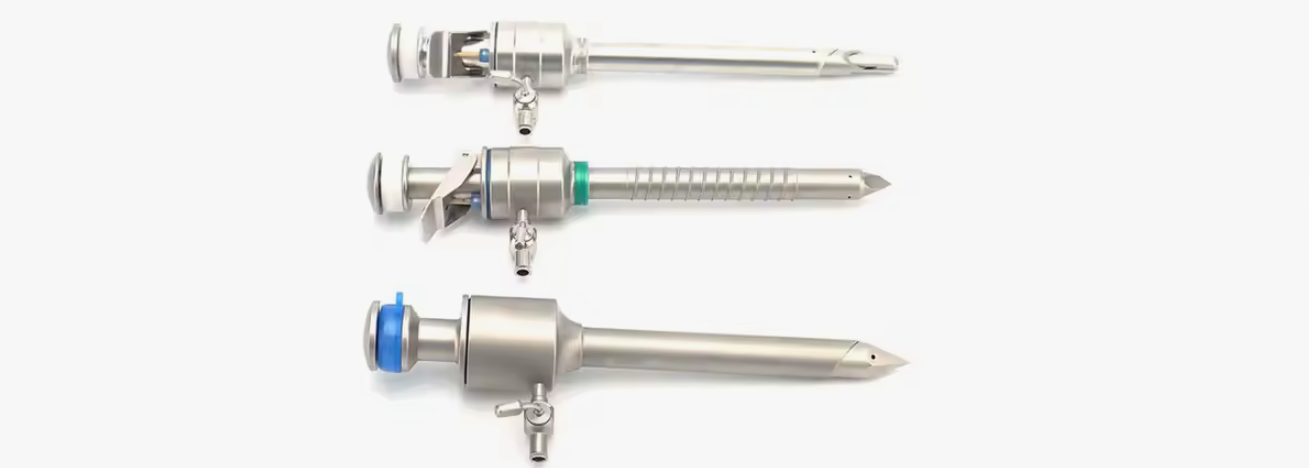
2. Application areas of medical trocars
Due to their efficiency and safety in various medical procedures, medical trocars are widely used in various clinical treatments. The following are some major application areas:
(1) Venous puncture and blood sampling
Medical trocars have important applications in venous puncture and blood sampling, especially when patients require multiple blood draws or long-term intravenous infusion. Traditional venous puncture may cause damage to the patient's blood vessels, while the medical trocar, due to the double protection of the inner needle and outer cannula, can effectively reduce the risk of blood vessel rupture and blood leakage.
Application scenarios: Venous blood sampling, intravenous infusion, intravenous drug injection.
Advantages: Precise puncture, reduced vascular damage, improved puncture comfort.
(2) Infusion and drug injection
In many medical procedures, drug injection is part of the treatment, and medical trocars provide a way to ensure accurate drug delivery while minimizing discomfort. The structure of the cannula needle effectively prevents excessive bending of the needle, avoiding discomfort or accidents during drug injection.
Application scenarios: Long-term intravenous infusion, administration of antibiotics or chemotherapy drugs, etc.
Advantages: Reduces patient pain and avoids repeated punctures.
(3) Catheter Insertion and Drainage
Medical cannula needles are also commonly used in catheter insertion and drainage procedures. By guiding the catheter into the predetermined site through the cannula needle, rapid and safe catheter placement can be achieved, such as for gallbladder drainage and abdominal drainage.
Application scenarios: Bile duct drainage, abdominal drainage, lung drainage, etc.
Advantages: High-precision positioning, reduced damage to surrounding tissues.
(4) Capsule Endoscopy
In some endoscopic examinations, medical cannula needles are used to puncture into the gastrointestinal tract or other cavities. By providing an entry channel for the endoscope, the cannula needle allows for accurate gastrointestinal examination and treatment procedures.
Application scenarios: Gastrointestinal examination, bladder examination, joint cavity injection, etc.
Advantages: Accurate and fast, reduced damage to internal cavity tissues.
(5) Nerve Block and Anesthesia
Medical cannula needles are often used for nerve blocks during anesthesia. Through precise puncture and injection of anesthetic drugs, the medical cannula needle ensures that the drug acts directly on the nerve or surrounding area, effectively reducing surgical pain.
Application scenarios: Epidural anesthesia, nerve block, etc.
Advantages: Reduces discomfort during the procedure and ensures the effectiveness of anesthesia.
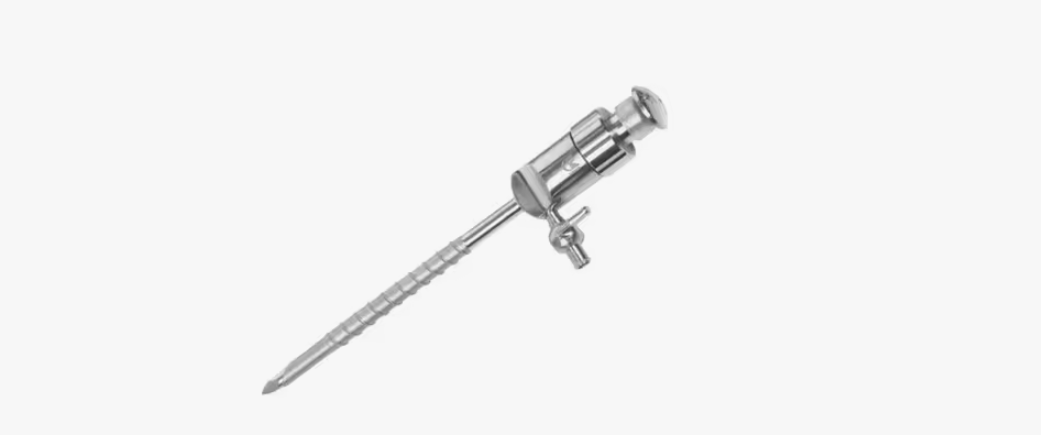
3. Advantages of Medical Cannula Needles
The application of medical cannula needles has undoubtedly greatly improved the efficiency and safety of medical procedures. The following are some of the main advantages of medical cannula needles:
(1) Reduced Patient Pain
Due to its ingenious structural design, the medical cannula needle reduces damage to the patient's tissues during puncture, reducing pain and discomfort, especially for patients requiring frequent procedures.
(2) Improved Puncture Accuracy
Due to the cooperation of the inner needle and the outer cannula, the medical cannula needle can precisely control the puncture position, reducing the chance of mis-puncture and ensuring the accuracy of treatment.
(3) Adaptable to various medical procedures
Medical cannulas play a crucial role in numerous medical procedures, from intravenous injections and catheter insertions to nerve blocks, offering a wide range of applications and meeting diverse clinical needs.
(4) Enhanced operational safety
The outer sheath design of the cannula protects the inner needle, reducing the risk of accidental needle sticks or contact with the patient's skin during procedures, thereby lowering the likelihood of infection.
Related Products
If you are interested in our products, please consult us
CONTACT DETAILS
- Address : 116 Weihe Road, Rudong County Economic Development Zone, Nantong City, Jiangsu Province,China
- TEL: : +86-18362400158
- Email: : jayne@eraymedtech.com
PRODUCTS
NEWS CENTER
MOBILE TERMINAL
Copyright © 2025 Eray Medical Technology (Nantong) Co., Ltd.
All Rights Reserved. The information provided on this website is intended for use only in countries and jurisdictions outside of the People's Republic of China.
 Medical Devices Manufacturers
Medical Consumables Factory
Medical Devices Manufacturers
Medical Consumables Factory
 CONTACT US
