


 English
 Español
 Français
Home / News / Industry News / N95 vs KN95 Mask Differences: Certification, Fit, and How to Choose One
News


N95 vs KN95 Mask Differences: Certification, Fit, and How to Choose One
 2026.08.13
 Industry News
An infection prevention nurse opens a supply cabinet and sees two boxes: one marked N95, the other KN95. Both claim 95% filtration, but one carries a NIOSH approval and the other lists a Chinese national standard. Which one can be assigned to the operating room, and which one should stay in the general ward?
Here is the short answer: both N95 and KN95 respirators are designed to filter at least 95% of non-oily airborne particles, but they are approved under different systems, are usually built with different strap configurations, and are held to different fit-testing expectations. The “95” tells you the filter target, not whether the mask fits the wearer.
Content
Side-by-Side Comparison
The table below summarizes the points that matter most for procurement and personal protection.
| Feature | N95 | KN95 |
|---|---|---|
| Regulatory standard | United States NIOSH, 42 CFR Part 84 | China GB 2626-2006 / GB 2626-2019 |
| Minimum filtration | ≥95% of non-oil particles | ≥95% of non-oil particles |
| Typical strap design | Head straps | Ear loops on many consumer models |
| Workplace fit testing | Required in many U.S. respiratory protection programs | Not commonly required for consumer use |
| Primary use | Healthcare, industrial, occupational | General protection, some healthcare and industrial use |
Because both standards require ≥95% filtration efficiency, the filter itself is not the deciding factor. The deciding factors are the approval mark, the fit on the face, and the policy of the place where the respirator will be used.
Data source: NIOSH 42 CFR Part 84 and Chinese GB 2626 requirements.
Certification Standards: NIOSH vs. GB 2626
An N95 is approved by the U.S. National Institute for Occupational Safety and Health under 42 CFR Part 84. A KN95 follows the Chinese national standard GB 2626. Both standards use sodium chloride aerosol to measure filtration of non-oily particles and require at least 95% efficiency. But the two certification systems are not legally interchangeable.
In a U.S. workplace with a respiratory protection program, OSHA may require a NIOSH-approved respirator. A KN95, even an authentic one, may not satisfy that requirement. Conversely, in China, a KN95 carrying GB 2626 is the nationally recognized filter class. The label on the package is the key: “NIOSH N95” tells you the product went through NIOSH approval; “KN95” tells you it meets the Chinese standard.
Also, certification does not mean medical approval. For healthcare use, the respirator may need additional authorization, such as FDA clearance in the United States or the equivalent local approval. Always check the facility policy before assigning a respirator to clinical staff.
Fit and Seal: Head Straps vs. Ear Loops
The biggest practical difference is often not the filter, but how the respirator stays on the face. Many N95 models use two head straps: one above the ears and one below. This design pulls the mask evenly against the face. Many KN95 models, especially consumer versions, use ear loops. Ear loops are more convenient, but they produce less uniform tension. A KN95 with a poor seal can leak far more than a properly fitted N95.
This is why fit testing matters. In U.S. occupational settings, workers wearing N95s are often required to pass a fit test before a new model is assigned. No equivalent process exists for someone buying KN95s online. The practical takeaway: choose the product with the best seal on the wearer’s face, and perform a user seal check every time.
All layers work together, but protection fails if the respirator does not seal around the face.
Which One Should You Choose?
Use this as a practical decision guide, not as a substitute for a medical recommendation:
- Healthcare workers in a regulated facility: follow the facility policy. In the United States, that typically means a NIOSH-approved N95 with a formal fit test.
- Construction, mining, or dusty industrial tasks: use a NIOSH-approved N95 or a locally approved equivalent; the approval mark is the important detail.
- General public and commuters: an authentic KN95 can be an acceptable option if it seals well and comes from a reputable source. Look for the GB 2626 mark on the mask or packaging.
- Anyone with a beard or an unusual face shape: no single model fits everyone. Try multiple models and check the seal.
If the respirator leaks, the filter efficiency becomes irrelevant. Fit always comes first.
Remember: A Disposable Medical Mask Is Not a Respirator
One frequent source of confusion is calling every protective face covering a “mask.” A disposable medical mask is designed to block droplets and splash; it does not create a facial seal and is not rated for airborne particle filtration. A respirator such as an N95 or KN95 is designed to protect the wearer from breathing in particles.
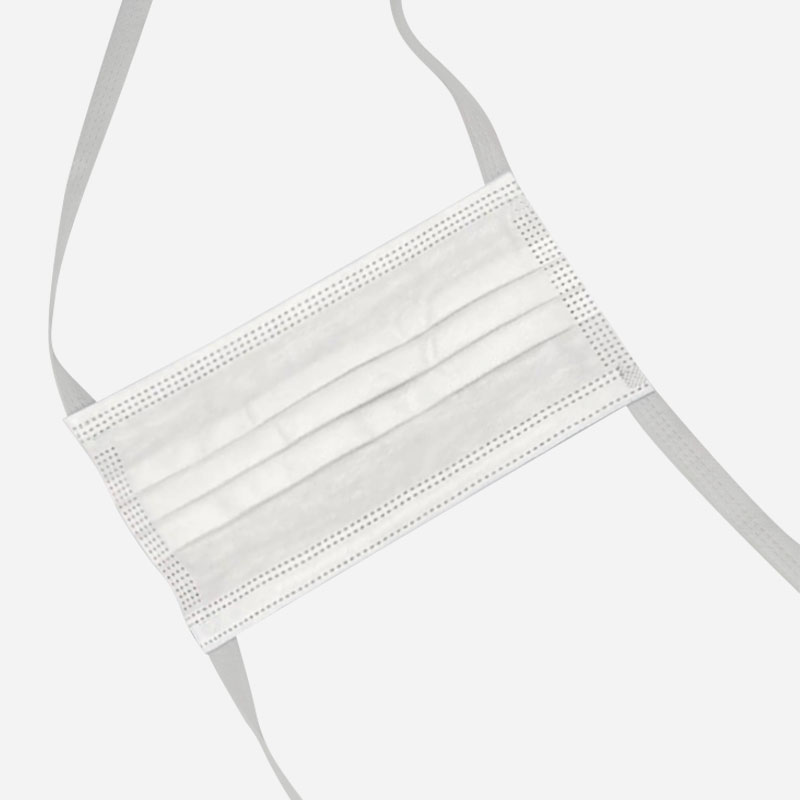
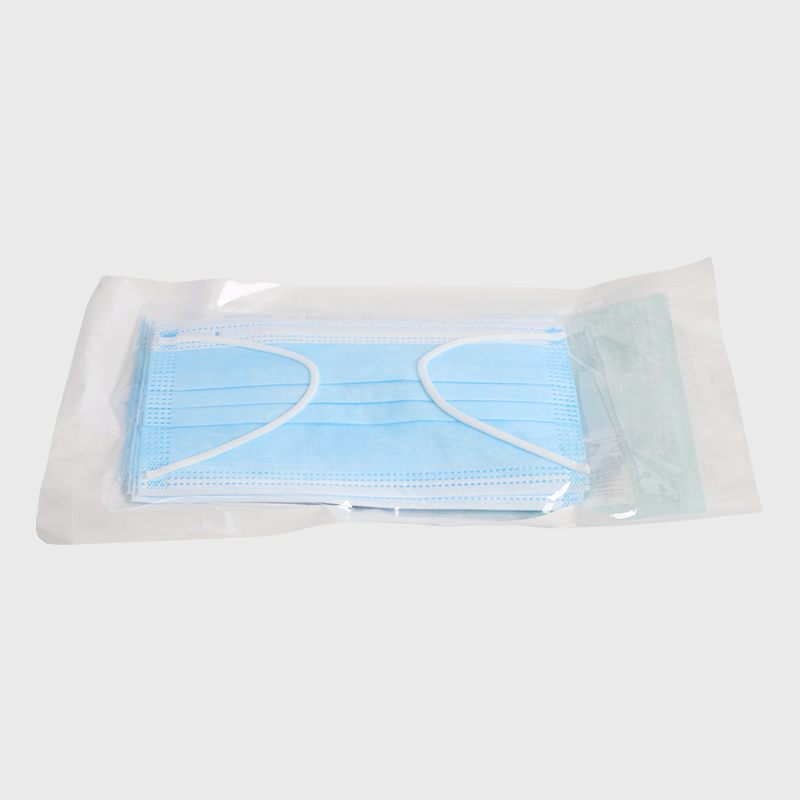
At Eray Medical Technology, we manufacture disposable medical masks in ISO 8 cleanrooms for hospitals and distributors that need a consistent barrier layer for routine patient contact. Facilities with sustainability goals can also assess our disposable biodegradable medical mask for non-surgical settings. Neither product claims to be a respirator; they fill a different role in infection control.
 Protective MaskEray MedTech Face Ma...View Product →
 Protective MaskEray MedTech Face Ma...View Product →
If you are writing a specification or preparing a tender, the clinical use guidance for disposable medical masks can help define that role, and you can speak with a medical device specialist when your requirements go beyond the standard N95/KN95 comparison.
Frequently Asked Questions
Q1: What is the main difference between N95 and KN95 masks?
N95 is a U.S. NIOSH-approved respirator certified under 42 CFR Part 84. KN95 is a Chinese respirator meeting GB 2626. Both filter at least 95% of non-oily particles, but the certification and typical fit differ.
Q2: Are KN95 masks as protective as N95 masks?
An authentic KN95 can provide similar filtration, but protection depends on fit and approval. In U.S. workplaces that require NIOSH-approved respirators, a KN95 is generally not accepted as an equivalent.
Q3: Can I reuse an N95 or KN95 mask?
Reuse is limited in healthcare because the strap tension, fit, and filter can degrade. Follow facility policy and manufacturer instructions. For personal use, replace the respirator when it becomes dirty, wet, or difficult to breathe through.
Q4: How do I choose between N95 and KN95 for personal use?
Choose the one that fits your face best and carries a verifiable approval mark. If you are in a country where NIOSH is the accepted standard, choose N95. If you are buying a KN95, confirm it shows the GB 2626 standard and came from a reliable source.
Related Products
If you are interested in our products, please consult us
CONTACT DETAILS
- Address : 116 Weihe Road, Rudong County Economic Development Zone, Nantong City, Jiangsu Province,China
- TEL: : +86-18362400158
- Email: : jayne@eraymedtech.com
PRODUCTS
NEWS CENTER
MOBILE TERMINAL
Copyright © 2025 Eray Medical Technology (Nantong) Co., Ltd.
All Rights Reserved. The information provided on this website is intended for use only in countries and jurisdictions outside of the People's Republic of China.
 Medical Devices Manufacturers
Medical Consumables Factory
Medical Devices Manufacturers
Medical Consumables Factory
 CONTACT US
