


 English
 Español
 Français
Home / News / Industry News / Does Wearing a Mask Help Prevent the Flu? Evidence, Mask Types, and Protection Tips
News


Does Wearing a Mask Help Prevent the Flu? Evidence, Mask Types, and Protection Tips
 2026.08.20
 Industry News
Yes, wearing a mask can help prevent the flu. When worn correctly, a mask traps the influenza virus in respiratory droplets and aerosols before it reaches another person — and it also reduces the dose that a healthy wearer inhales. That is why public health agencies continue to recommend masking as one layer of protection during respiratory virus season. The key is to choose the right mask, use it properly, and combine it with vaccination, hand hygiene and good ventilation.
Content
- 1 How the Flu Spreads and Why a Mask Can Reduce Infection
- 2 What Research Says About Masks and Influenza
- 3 Which Mask Should You Wear for Flu Protection?
- 4 How to Use a Mask Correctly
- 5 When Is It Wise to Wear a Mask for Flu?
- 6 Mask Quality Comes From Manufacturing Discipline
- 7 Common Questions About Masks and Flu Prevention
How the Flu Spreads and Why a Mask Can Reduce Infection
Influenza is primarily transmitted in three ways:
- Droplet transmission: large particles expelled by coughing, sneezing or talking that land on mucous membranes.
- Aerosol transmission: smaller particles that stay suspended in the air and can be inhaled.
- Contact transmission: touching contaminated surfaces and then touching your face.
Masks work by intercepting these particles. A well-fitted mask covers the mouth and nose, which are the main entry and exit routes for the influenza virus. The multiple layers of a mask physically block droplets and reduce the onward spread of aerosols.
This isometric view shows the typical structure of a medical mask: an outer fluid-resistant layer, a melt-blown filter layer, an inner comfort layer, and sometimes a fourth soft layer against the skin. The melt-blown layer is the main filter that captures virus-carrying particles.
What Research Says About Masks and Influenza
Laboratory studies consistently show that masks reduce influenza virus exposure. A study published in the Journal of Hospital Infection reported that wearing a surgical mask reduced exposure to aerosolized influenza virus by 1.1- to 55-fold, with an average reduction of 6-fold. In other words, even the minimum observed protection more than halved the virus dose.
The chart above illustrates the range of reduction seen in that study. The average six-fold reduction is enough to lower the likelihood of infection for a healthy person while also shortening how far infected people spread the virus.
One important nuance is that masks protect in two directions. Source control — when an infected person wears a mask — is stronger than personal protection alone, because influenza virus is released in concentrated bursts during sneezing, coughing and even talking. A mask worn by the infected person reduces the load entering the environment before anyone else is exposed.
How the evidence translates to real-world settings
In households and healthcare facilities, mask use is linked to lower secondary attack rates when one member has flu. Masks are especially effective when the infected person wears them because this contains the virus at its source. Some studies also suggest that mask-wearing reduces the viral dose among exposed people, which can lead to milder illness.
Which Mask Should You Wear for Flu Protection?
Not all masks perform equally. The table below summarizes the main options.
| Mask type | Filtration performance | Best used for |
|---|---|---|
| Cloth mask | Variable; depends on layers and fit | Everyday community settings |
| Disposable medical mask | Blocks large droplets and some aerosols | Clinical settings, crowded public transport |
| N95 respirator | At least 95% of airborne particles when fitted | High-risk exposure, healthcare procedures |
For most everyday flu prevention, a well-fitting disposable medical mask is a solid choice because it combines consistent filtration with breathability. In crowded indoor settings, healthcare workers often prefer N95 or equivalent respirators for additional protection. Regardless of type, the mask only works if it seals comfortably around the nose and mouth without gaps.
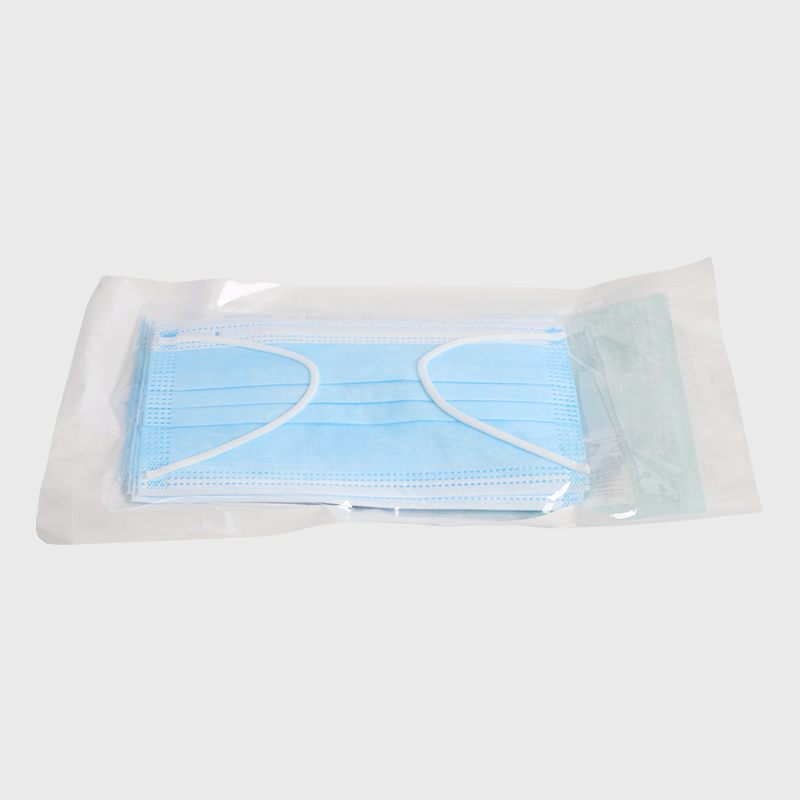
For healthcare procurement teams, checking whether the mask meets recognized standards such as EN 14683, ASTM F2100, or YY/T 0969 is an essential part of supplier evaluation. Eray Medical Technology produces disposable medical masks in an ISO Class 8 cleanroom, with testing traceability that supports clinical confidence.
 Protective MaskEray MedTech Face Ma...View Product →
How to Use a Mask Correctly
Fit matters. A mask that is worn incorrectly can fail without you knowing. Follow these steps:
- Clean your hands before touching the mask.
- Place the mask over your nose and mouth, and secure it behind your ears or head.
- Press the flexible nose wire to shape the mask to your face.
- Make sure the mask fits snugly under the chin and along the cheeks.
- After touching a used mask, wash or sanitize your hands.
- Replace the mask when it becomes damp, dirty, or after a few hours of continuous wear.
Masks are protective, but they are not a substitute for vaccination, regular handwashing, and improving air exchange. Use them as part of a layered prevention strategy.
When Is It Wise to Wear a Mask for Flu?
You should consider masking in these situations:
- You have cold or flu symptoms and need to be around other people.
- You are caring for someone who is sick with a respiratory illness.
- You are in a crowded indoor space, especially during peak flu activity.
- You are in a healthcare facility or visiting someone who is at high risk.
- You are at increased risk of complications due to age or underlying conditions.
Older adults, pregnant people, and individuals with chronic lung or heart conditions are at higher risk of severe flu complications. For them, using a mask in high-traffic indoor spaces can be a sensible risk-reduction measure in addition to vaccination.
Public health agencies update these recommendations as local circulation changes. The decision to wear a mask can be adjusted to personal risk, local guidance, and the respiratory illness situation in your community.
Mask Quality Comes From Manufacturing Discipline
Preventive tools are only as good as their production conditions. Eray Medical Technology (Nantong) Co., Ltd. is a medical device manufacturer that integrates research, development, production and sales. Located in Rudong Economic Development Zone near Shanghai, the company operates a manufacturing base covering 70 mu with a building area of 20,310 square meters.
Eray has established a comprehensive quality control system that covers the entire production process, from raw material handling to finished goods traceability. Its ISO Class 8 cleanroom supports mask production, while the ISO Class 7 microbiological laboratory and partial ISO Class 6 physical and chemical laboratory allow in-house verification of consumables. The company also holds ISO 13485 certification and offers CE-marked and FDA-listed products for international markets.
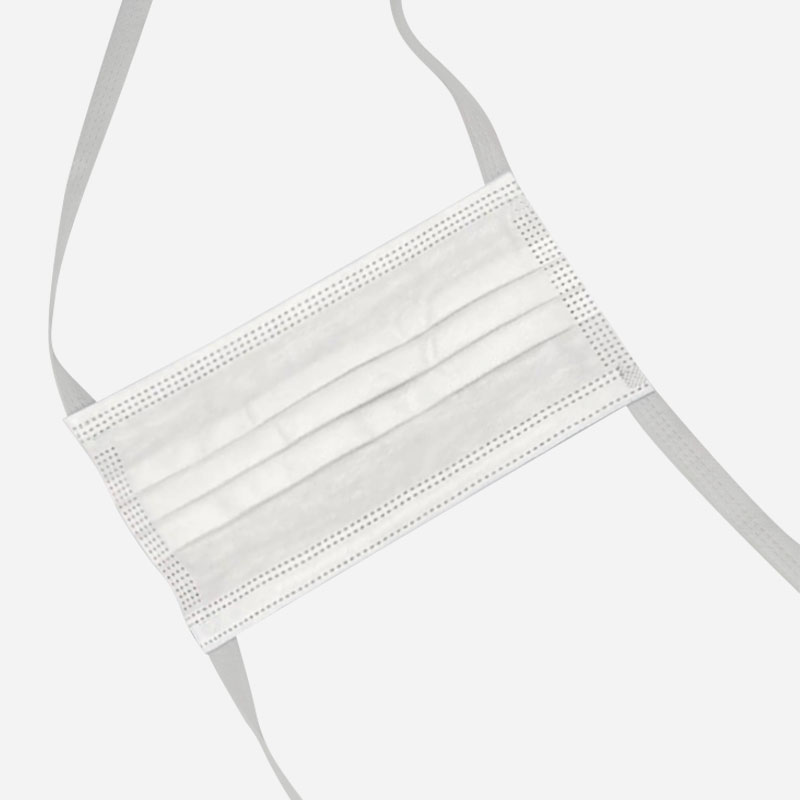
For customers looking for a more sustainable option, Eray also supplies a biodegradable medical mask that meets equivalent fluid resistance and filtration expectations while breaking down more readily after disposal. Choosing materials with documented performance and manufacturing transparency helps healthcare buyers reduce supply risk.
 Protective MaskEray MedTech Face Ma...View Product →
Common Questions About Masks and Flu Prevention
Q1: Can a mask completely prevent the flu?
No mask offers absolute protection. A well-fitted mask significantly lowers the amount of influenza virus you inhale or spread, but it works best alongside vaccination and hand hygiene.
Q2: How often should I change a surgical mask?
Replace a surgical mask when it becomes damp, soiled or damaged, and after prolonged use of around four hours. Disposable masks are designed for single use.
Q3: Is an N95 respirator better than a medical mask for flu?
N95 respirators filter a higher percentage of airborne particles when fitted properly. For most public settings, a well-fitting medical mask offers strong protection, but N95s are preferred in high-risk healthcare procedures.
Q4: Can I reuse a disposable mask by leaving it in a paper bag?
Disposable masks are not intended for reuse. Removing and storing them can contaminate their surfaces. Use a new mask whenever you need protection.
Related Products


If you are interested in our products, please consult us
CONTACT DETAILS
- Address : 116 Weihe Road, Rudong County Economic Development Zone, Nantong City, Jiangsu Province,China
- TEL: : +86-18362400158
- Email: : jayne@eraymedtech.com
PRODUCTS
NEWS CENTER
MOBILE TERMINAL
Copyright © 2025 Eray Medical Technology (Nantong) Co., Ltd.
All Rights Reserved. The information provided on this website is intended for use only in countries and jurisdictions outside of the People's Republic of China.
 Medical Devices Manufacturers
Medical Consumables Factory
Medical Devices Manufacturers
Medical Consumables Factory
 CONTACT US
