


 English
 Español
 Français
Home / News / Industry News / Do Masks Work Against COVID-19? Evidence on Fit, Consistency, and Mask Choice
News


Do Masks Work Against COVID-19? Evidence on Fit, Consistency, and Mask Choice
 2026.11.25
 Industry News
Short answer: yes, masks can work against COVID-19, but not as a magic shield. A loose surgical mask with gaps at the cheeks is not the same intervention as a well-fitted respirator worn consistently in a crowded clinic. The practical question is not simply “do masks work?” It is “which mask, worn how, by whom, in what setting?”
That distinction matters for public health messaging and for procurement. A mask reduces the number of infectious particles released into the air and, depending on fit and filtration, reduces the number a wearer breathes in. The effect is real but conditional: it depends on the mask, the fit, the time worn, the amount of virus circulating, and whether people use it consistently rather than only when reminded.
Content
- 1 The Practical Answer: Yes, With Conditions
- 2 What the Best Evidence Says—and Why Headlines Conflict
- 3 Fit, Layers, and Timing: Where Protection Is Won or Lost
- 4 Mask Types Compared for Clinics, Offices, and Daily Use
- 5 A Buyer’s View: What Healthcare Procurement Should Verify
- 6 FAQs: Do Masks Work Against COVID-19?
The Practical Answer: Yes, With Conditions
For COVID-19, masks are best understood as source control first and personal protection second. When an infected person wears a mask, fewer respiratory particles escape. When a vulnerable person wears a well-fitted respirator, the dose of inhaled particles can fall. The two effects combine in a room full of people, which is why mask policies tend to matter most in crowded, poorly ventilated, high-transmission settings.
Bottom line: Masks reduce risk, but a mask that slips, stays damp, or is pulled down between conversations offers much less protection than a consistent, well-fitted option. Type matters; fit and use matter just as much.
For healthcare buyers, this translates into a simple rule: do not compare masks by the word “medical” alone. Compare filtration, fit, fluid resistance, breathability, sizing, and instructions for use. A product that is comfortable enough to be worn correctly for a full shift can outperform a technically stronger mask that staff remove after twenty minutes.
What the Best Evidence Says—and Why Headlines Conflict
The strongest real-world evidence is often cited from a large cluster-randomized trial in Bangladesh. Villages where surgical masks were promoted saw a 12% reduction in symptomatic COVID-19, while villages using cloth masks saw a 5% reduction; in villages where mask use was sustained at high levels, the reduction was larger. That study is valuable because it measured actual community use, not laboratory filtration alone.
Source: Yale SOM/EGC summary of the Bangladesh cluster-randomized mask trial.
Randomized trials and meta-analyses can look less impressive. A 2023 Cochrane review found low-certainty evidence and small differences between surgical masks and no masks in some community settings. That does not prove masks are useless. It reflects poor adherence, low exposure, imperfect outcome measurement, and the difficulty of testing a behavior rather than a drug. A 2025 evidence review in PMC also noted that surgical and cloth masks provide only modest filtration efficiency, while respirators perform better when fitted.
The honest conclusion is therefore mixed but useful: masks reduce transmission risk on average, especially when used consistently and in higher-risk settings, but they are not a guarantee. A mask is a layer, not a substitute for vaccination, ventilation, testing, isolation, or hand hygiene.
Fit, Layers, and Timing: Where Protection Is Won or Lost
Fit is the most underrated variable. Gaps around the nose, cheeks, and chin let air bypass the filter. A mask should cover the nose and mouth, sit snugly against the face, and stay in place during talking, walking, and bending. For respirators, a fit check matters: cup the mask and exhale gently to feel for leakage. For medical masks, a nose wire and adjustable ear loops can make the difference between a decorative covering and a useful barrier.
Timing and consistency are close behind fit. A mask worn only in the lobby, then removed in a packed break room, provides limited protection. A damp or visibly soiled mask should be replaced. Reusing a disposable mask for days is not equivalent to using a fresh one, and “mask breaks” in crowded indoor spaces can undermine the benefit of wearing one at all.
For a practical checklist on wear, removal, and respiratory virus prevention, see this guide to masks and respiratory virus prevention.
Mask Types Compared for Clinics, Offices, and Daily Use
No single mask is best for every setting. The right choice balances filtration, fit, breathability, cost, and the user’s ability to wear it correctly. The table below is a procurement-oriented comparison, not a clinical ranking.
| Mask type | Main role | Typical strength | Practical limitation | Common use |
|---|---|---|---|---|
| Medical/surgical mask | Source control, droplet barrier | Comfortable, low cost, widely available | Side gaps; lower filtration than a fitted respirator | Clinics, daily errands, sick contacts |
| N95/KN95/KF94 respirator | Inhalation and exhalation protection | Higher filtration when fit is good | Needs fit check; cost and comfort vary | High-risk wards, crowded indoor settings |
| Cloth mask | Source control | Reusable, familiar | Variable filtration and fit | Low-risk settings when nothing better is available |
| Biodegradable medical mask | Source control with environmental consideration | Similar intended use to medical masks | Verify fluid resistance and shelf-life data | Organizations with sustainability targets |
A Buyer’s View: What Healthcare Procurement Should Verify
Hospitals and distributors should ask for more than a product photo. Check the intended use, filtration data, fluid resistance, biocompatibility, shelf life, packaging integrity, and instructions in the local language. For respirators, ask how fit is addressed across face sizes. For medical masks, ask whether the ear loops, nose wire, and inner layer remain comfortable during extended wear. A cheap mask that staff refuse to wear correctly is not a bargain.
Eray Medical Technology (Nantong) Co., LTD., is a medical device manufacturing enterprise integrating research and development, production, and sales. The company is located in Rudong Economic Development Zone, adjacent to Shanghai, with convenient transportation, and developed information. As a professional medical devices manufacturers and medical consumables factory, The company covers an area of 70 mu, with a construction area of 20310 square meters. It has an ISO Class 8 cleanroom, an ISO Class 7 microbiological laboratory, and a partial ISO Class 6 physical and chemical laboratory. Eray has established a comprehensive quality control system that encompasses the entire production process, including testing and traceability, from the ISO Class 8 cleanroom to a partial ISO Class 6 physical and chemical laboratory, ensuring that every customer receives trustworthy products.
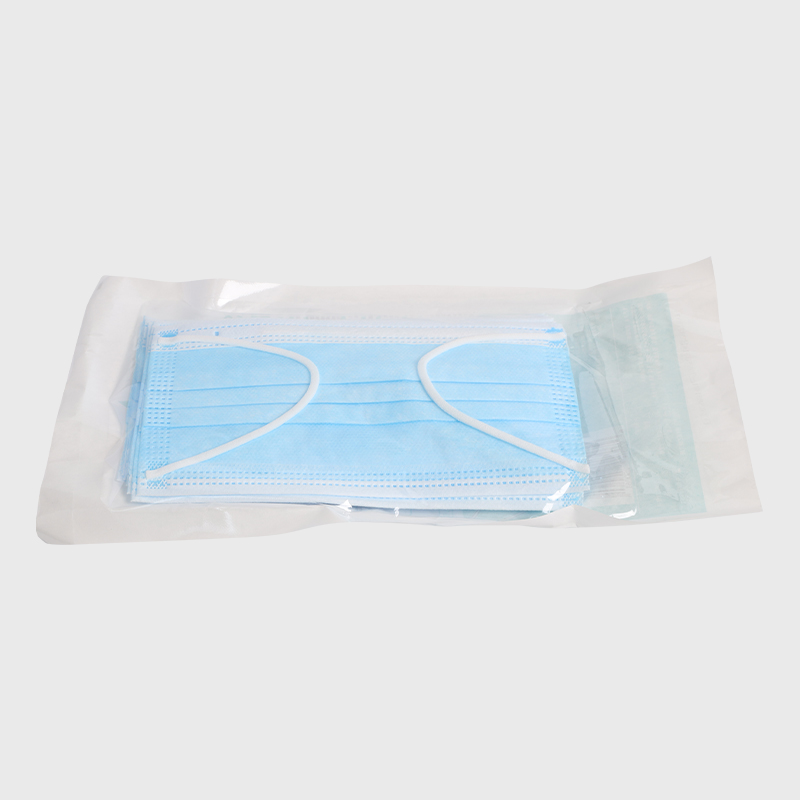 Disposable 3-Ply Medical Mask with Earloop or Binding BeltAn everyday medical mask option from Eray's protective range, with three-ply construction, adjustable nose clip, soft ear loops, and BFE >95%.View Product →
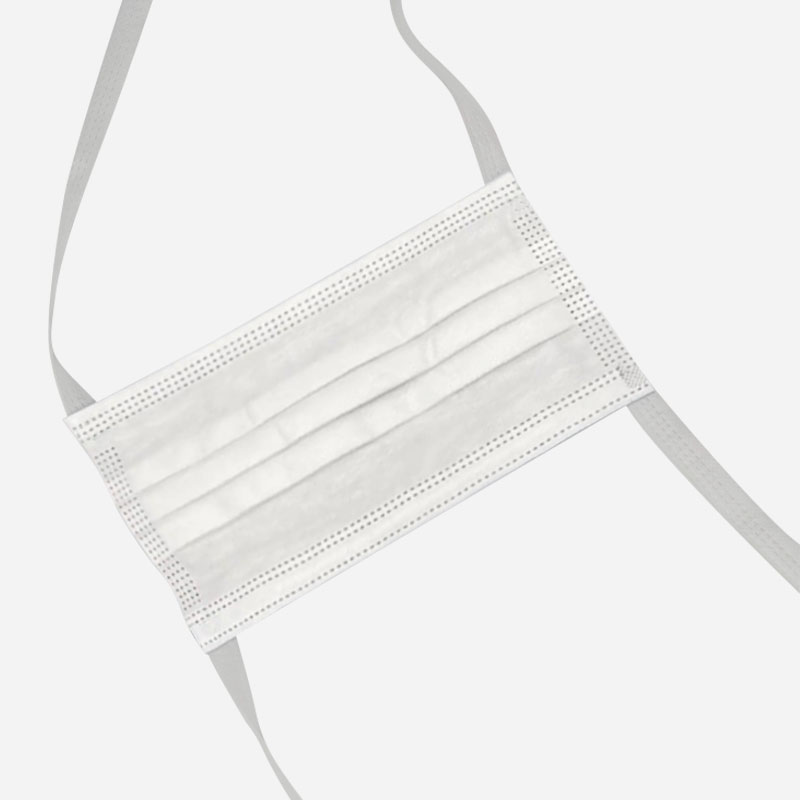 Disposable Biodegradable 3-Ply Medical MaskLower-environmental-impact three-ply medical mask using PLA+PBAT, with water-blocking outer layer, melt-blown filtration, soft inner layer, and BFE >95%.View Product →
For organizations comparing everyday medical masks with a lower-environmental-impact option, Eray’s protective mask range includes disposable medical masks and a biodegradable medical mask option. The procurement question should still be evidence-led: confirm the product’s intended use, test reports, packaging, and storage conditions before switching a clinical supply line.
Illustrative comparison based on typical product positioning; verify actual specifications with the supplier.
FAQs: Do Masks Work Against COVID-19?
Q1: Do masks really work against COVID-19?
Yes, they can reduce spread, especially when they fit well and are worn consistently in crowded or high-risk settings. The effect is partial, not absolute.
Q2: Are surgical masks enough?
For many everyday situations, a well-fitted surgical mask offers useful source control. In high-risk clinical areas, a fitted respirator is generally preferred.
Q3: Is N95 better than a medical mask?
Respirators usually filter more when fitted correctly. A poorly fitting respirator can perform worse than a well-fitting medical mask, so fit matters first.
Q4: How often should a disposable mask be changed?
Replace it when it is damp, soiled, damaged, or no longer fits snugly. Follow the manufacturer’s instructions and facility policy for clinical use.
Q5: Can wearing a mask cause harm?
Masks are generally safe for most people, but some users need alternatives or breaks under supervision. Comfort and breathing resistance should be monitored.
Q6: Do masks help if others do not wear one?
They can still reduce your exposure, especially with a well-fitted respirator, but protection is stronger when everyone uses masks consistently in shared indoor spaces.
Related Products

If you are interested in our products, please consult us
CONTACT DETAILS
- Address : 116 Weihe Road, Rudong County Economic Development Zone, Nantong City, Jiangsu Province,China
- TEL: : +86-18362400158
- Email: : jayne@eraymedtech.com
PRODUCTS
NEWS CENTER
MOBILE TERMINAL
Copyright © 2025 Eray Medical Technology (Nantong) Co., Ltd.
All Rights Reserved. The information provided on this website is intended for use only in countries and jurisdictions outside of the People's Republic of China.
 Medical Devices Manufacturers
Medical Consumables Factory
 CONTACT US
