


 English
 Español
 Français
Home / News / Industry News / Boiling Disinfection Equipment Buyer Guide for CSSD Teams and Distributors
News


Boiling Disinfection Equipment Buyer Guide for CSSD Teams and Distributors
 2026.11.16
 Industry News
A CSSD supervisor opens a morning load and finds condensation on hinged forceps, a wet basket, and a cycle printout that shows the right temperature but not the right story. The team has cleaned the instruments, but the disinfection step is now a question mark. That scenario is common in departments weighing a boiling disinfection purchase.
The practical conclusion: Boiling disinfection equipment is a validated thermal disinfection tool for reprocessed instruments, not a replacement for sterilization. It earns its place when the chamber, cycle, water quality, load pattern, and records match the hospital’s infection-control policy. It creates risk when those details are left to the purchase order.
Content
- 1 What Boiling Disinfection Equipment Does—and Does Not Do
- 2 Where It Fits in the CSSD Workflow
- 3 Selection Criteria That Change the Total Cost
- 4 Boiling, Thermal Disinfection, and Sterilization: Know the Boundary
- 5 Validation and Documentation Buyers Should Request
- 6 Installation, Utilities, and Daily Use
- 7 Drying and Load Handoff Are Part of the Purchase
- 8 Supplier Qualification: What Eray Medical Technology Brings to the Table
- 9 Frequently Asked Questions
- 9.1 Q1: Is boiling disinfection the same as sterilization?
- 9.2 Q2: What temperature should a boiling disinfection cycle reach?
- 9.3 Q3: Can boiling disinfection equipment process lumened instruments?
- 9.4 Q4: What water quality is needed?
- 9.5 Q5: How do we verify a cycle record?
- 9.6 Q6: What should distributors ask before quoting?
What Boiling Disinfection Equipment Does—and Does Not Do
Boiling disinfection equipment uses heated water, often with vacuum-assisted air removal and circulation, to bring a load to a controlled time-temperature exposure. The vacuum step helps remove air pockets so hot water can contact instrument surfaces. The disinfection stage reduces microbial load on cleaned instruments. It does not guarantee spore kill, and it does not turn a critical instrument into a sterile item.
That distinction matters at the buying stage. A unit that reaches 95°C on the display may still fail a load if the chamber has cold spots, the baskets are overloaded, or poor water quality leaves scale on hinges and lumens. For a plain-language definition, see what is a vacuum boiling washer; for procurement, ask for load-specific validation rather than relying on a brochure temperature.
Indicative process windows only; final values depend on the validated cycle, load configuration, and local guidance. Where applicable, thermal disinfection reviews often reference the ISO 15883 series for washer-disinfectors.
Where It Fits in the CSSD Workflow
In a typical reprocessing flow, boiling disinfection sits after cleaning and before drying, inspection, packaging, and sterilization. The useful question is not “Do we need a boiling unit?” but “Which loads need this step, and what evidence will prove the cycle worked?”
- Receive and sort instruments, then clean and rinse according to the validated procedure.
- Load the chamber with the basket pattern and connectors defined in the validation file.
- Run the disinfection cycle, including any vacuum, heating, hold, and drying stages.
- Check cycle records, load condition, and alarms before release to inspection.
- Dry, inspect, package, and sterilize critical items as required by policy.
For loads that are heat-stable and compatible with the validated cycle, a vacuum-assisted boiling washer can be a practical alternative to manual hot-water handling. The decision should be based on the load list, not on a single instrument.
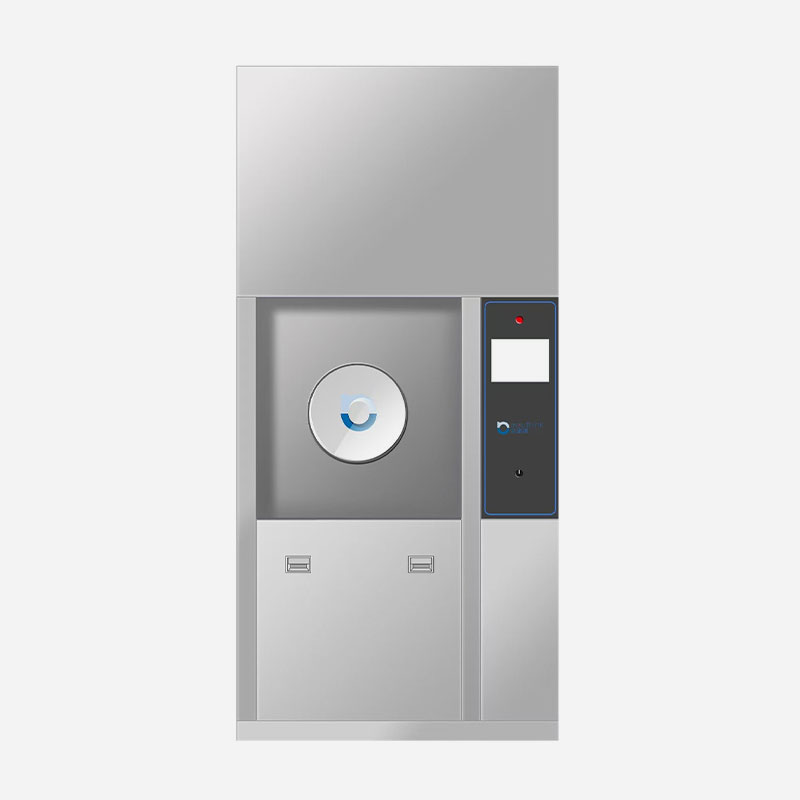 NB-300 Series Vacuum Boiling WasherFor heat-stable, validated loads, this double-door system automates cleaning, disinfection, and drying of complex and tube-cavity instruments; assess load compatibility and technical performance before negotiation.View Product →
Selection Criteria That Change the Total Cost
Most budget surprises appear after installation: slow cycles, rejected loads, scale buildup, or records that cannot satisfy auditors. These checks belong in the technical evaluation, not in the final negotiation.
Temperature, time, and A0
Ask for the validated temperature range, hold time, and—where used—the A0 target for thermal disinfection. A0 converts time-temperature exposure into a single value; it is useful only when probe placement and load conditions are defined. Confirm the control tolerance and how the cycle responds to a cold load.
Chamber, baskets, and load pattern
Chamber volume alone is a poor measure. Check usable basket dimensions, hinge and lumen access, circulation paths, and the worst-case load you intend to process. A larger chamber that cannot wet a complex load is not a larger capacity.
Water, detergent, and materials
Water hardness, chloride content, and detergent residue affect stainless steel, seals, and records. Request a water-quality specification and a list of compatible materials. If the unit will process mixed metals, confirm the corrosion risk and the drying stage that follows.
Controls, records, and alarms
Look for cycle data that can be exported without a special service visit. Check sensor calibration, fault logs, lid interlocks, low-water protection, and how the unit behaves after a power interruption. These details decide whether the equipment is auditable in daily use.
| Check | Question to ask | Why it matters |
|---|---|---|
| Validated cycle | Can the supplier provide load-specific temperature and time data, including a worst-case load? | A display temperature does not prove exposure across the chamber. |
| Load fit | Will the baskets hold hinged instruments, lumens, and mixed sets without blocking circulation? | Poor loading creates cold spots and wet loads. |
| Water quality | What hardness, chloride, and residue limits apply? | Scale and corrosion shorten equipment life and damage instruments. |
| Records | Can cycle data be exported, traced, and reviewed without a service visit? | Audit and release decisions depend on retrievable evidence. |
| Service | What spare parts, training, and response terms are included? | Downtime in a CSSD quickly outweighs the initial price gap. |
Boiling, Thermal Disinfection, and Sterilization: Know the Boundary
Boiling disinfection is often grouped with thermal disinfection because both use heat and water. They are not interchangeable with sterilization. Use the following boundary as a starting point for policy review.
- Boiling disinfection: reduces microbial load on cleaned instruments; it is not a sterilization release step.
- Thermal disinfection: uses defined time-temperature exposure, sometimes expressed as an A0 value, within a validated washer-disinfector cycle.
- Steam sterilization: uses pressurized steam at defined cycles, usually 121°C or 134°C, with biological and chemical monitoring for critical items.
If a load is critical, the boiling step is preparation, not the final release point. The sterilizer and its monitoring remain the release authority.
Validation and Documentation Buyers Should Request
For a hospital project, the equipment file should be as important as the chamber. Ask for documents that match your actual load and utilities, not a generic brochure. Where applicable, align the review with ISO 15883 requirements for washer-disinfectors and with local validation rules.
- Cycle validation report with load maps, sensor placement, and worst-case load definition.
- Calibration certificates for temperature sensors and controllers, with traceability.
- Factory acceptance test and site acceptance test records, plus IQ/OQ/PQ support if required.
- Water-quality and detergent compatibility statement, including residue checks.
- Alarm, interlock, and failure-mode test records.
- Recommended spare parts, consumables, and preventive maintenance schedule.
If a supplier cannot explain how the unit will be validated in your department, the lowest quote is incomplete.
Installation, Utilities, and Daily Use
A boiling unit that fits through the door can still fail commissioning if the utilities are wrong. Before order release, confirm power capacity and phase, water supply pressure and quality, drain temperature limits, ventilation, floor loading, and service access. In a busy CSSD, the space around the unit is part of the workflow: loading, unloading, drying, and inspection should not cross clean and dirty paths.
Daily use should include a start-of-shift check, load configuration control, cycle record review, and a cleaning schedule for the chamber, filters, and water system. Train staff on what a failed cycle looks like—not only how to press start.
Drying and Load Handoff Are Part of the Purchase
Wet instruments after disinfection are a contamination and corrosion risk. If the boiling unit does not include an effective drying stage, plan for a drying cabinet and a defined handoff to inspection and packaging. The drying method should match hinged instruments, lumens, and mixed-material loads.
 NQS-QM300 Medical Drying Cabinet for Sterile ProcessingUse after disinfection to dry surgical instruments, glassware, and respiratory anesthesia items; adjustable temperature and time, single- or double-door configurations, stainless steel chamber and racks.View Product →
Supplier Qualification: What Eray Medical Technology Brings to the Table
Eray Medical Technology (Nantong) Co., LTD., is a medical device manufacturing enterprise integrating research and development, production, and sales. The company is located in Rudong Economic Development Zone, adjacent to Shanghai, with convenient transportation, and developed information. As a professional medical devices manufacturers and medical consumables factory, The company covers an area of 70 mu, with a construction area of 20310 square meters. It has an ISO Class 8 cleanroom, an ISO Class 7 microbiological laboratory, and a partial ISO Class 6 physical and chemical laboratory. Eray has established a comprehensive quality control system that encompasses the entire production process, including testing and traceability, from the ISO Class 8 cleanroom to a partial ISO Class 6 physical and chemical laboratory, ensuring that every customer receives trustworthy products.
For a CSSD project, that manufacturing and quality context matters when the conversation moves from a single unit to repeatable supply, documentation, and long-term support. Bring your load list, utility data, and validation questions to the contact page before the tender is fixed. The right equipment specification is easier to defend when it is built around actual cycles, not a catalogue page.
Frequently Asked Questions
Q1: Is boiling disinfection the same as sterilization?
No. Boiling disinfection reduces microbial load but does not provide the sterility assurance of a validated steam sterilization cycle. Critical items still require sterilization.
Q2: What temperature should a boiling disinfection cycle reach?
It depends on the validated cycle and local policy. Many thermal disinfection protocols use controlled time-temperature exposure, and vacuum-assisted units may have different set points. Ask for load-specific validation data.
Q3: Can boiling disinfection equipment process lumened instruments?
Only if the cycle is validated for the lumen size, connector, and load orientation. Water contact and drying are the limiting factors, not chamber size alone.
Q4: What water quality is needed?
Confirm hardness, chloride, and residue limits with the supplier and infection-control team. Poor water quality can cause scale, corrosion, and rejected loads.
Q5: How do we verify a cycle record?
Check temperature, hold time, cycle ID, sensor calibration, and alarm status. The record should be exportable and traceable to the load.
Q6: What should distributors ask before quoting?
Ask for the load list, utility data, validation documents, spare-parts list, and service response terms. A quotation without those items is only a price, not a project plan.
Related Products

If you are interested in our products, please consult us
CONTACT DETAILS
- Address : 116 Weihe Road, Rudong County Economic Development Zone, Nantong City, Jiangsu Province,China
- TEL: : +86-18362400158
- Email: : jayne@eraymedtech.com
PRODUCTS
NEWS CENTER
MOBILE TERMINAL
Copyright © 2025 Eray Medical Technology (Nantong) Co., Ltd.
All Rights Reserved. The information provided on this website is intended for use only in countries and jurisdictions outside of the People's Republic of China.
 Medical Devices Manufacturers
Medical Consumables Factory
 CONTACT US
