


 English
 Español
 Français

What role does the medical trocar play in laparoscopic surgery?
 2026.01.08
 Industry News
With the continuous development of minimally invasive surgery, laparoscopic surgery has become a common choice for various surgical procedures. Compared with traditional open surgery, laparoscopic surgery has advantages such as less trauma, faster recovery, and fewer complications. In this surgical system, the medical trocar plays a crucial yet often overlooked role. It can be said that without the medical trocar, laparoscopic surgery would be almost impossible to perform successfully.
1. Basic Structure and Composition of the Medical Trocar
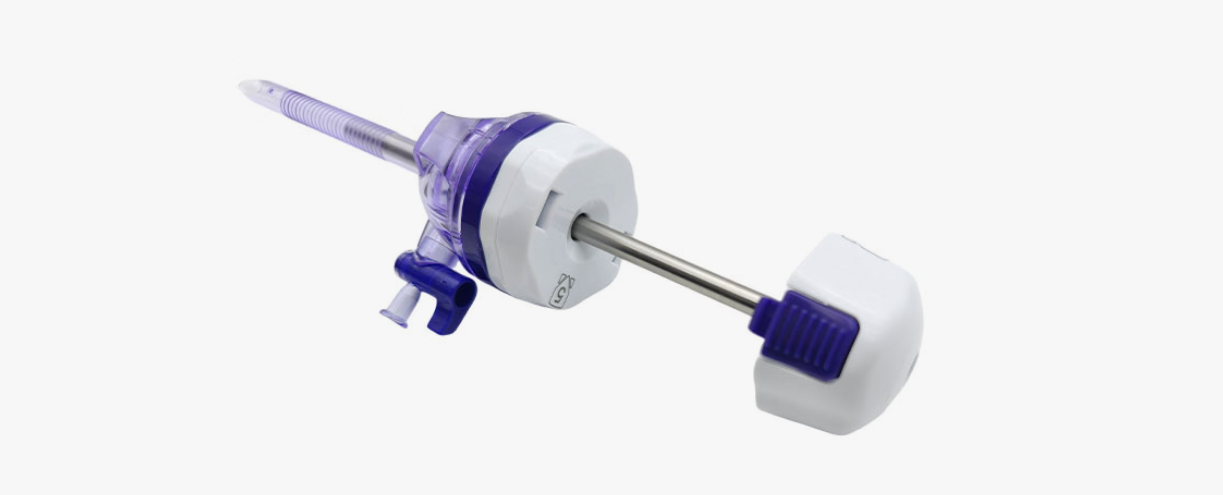
A medical trocar usually consists of two parts: a puncture needle and a cannula. The puncture needle is located inside, with a sharp tip used to penetrate the abdominal wall tissue; the cannula is located outside and remains in the body after the puncture is completed, maintaining the opening of the channel.
In modern laparoscopic surgery, medical trocars often integrate a sealing structure and a gas interface to ensure that gas does not leak from the abdominal cavity during surgery, thus maintaining stable abdominal pressure.
2. Establishing the "First Channel" for Laparoscopic Surgery
The first step in laparoscopic surgery is to puncture the abdominal wall with a medical trocar to establish a working channel into the abdominal cavity. This channel is not only the entry point for the laparoscope into the body, but also the foundation for all subsequent surgical operations.
The design of the medical trocar makes the puncture process more controllable, allowing for channel establishment while minimizing tissue damage. This is of great significance in reducing intraoperative bleeding and postoperative pain.
3. Providing a Pathway for Establishing and Maintaining Pneumoperitoneum
In laparoscopic surgery, carbon dioxide gas must be injected into the abdominal cavity to create a "pneumoperitoneum," expanding the abdominal cavity space. This process lifts the abdominal wall, separating the internal organs and providing the surgeon with a clear surgical field and sufficient operating space.
The medical trocar is the important channel for carbon dioxide gas to enter the abdominal cavity. Through the gas interface on the cannula, the gas can be stably and continuously injected to maintain abdominal pressure. Good sealing performance also prevents gas leakage, ensuring the stability of the abdominal cavity environment during surgery.
4. Providing a Stable Passage for Endoscopes and Surgical Instruments
After the surgery officially begins, various instruments such as laparoscopes, grasping forceps, scissors, and electrocautery devices need to frequently enter and exit the abdominal cavity. The channel created by the medical trocar ensures the smooth and safe entry of instruments into the body, while minimizing repeated damage to the abdominal wall tissue.
Without a medical trocar, instruments would repeatedly penetrate the abdominal wall directly, increasing the risk of trauma and making it difficult to maintain a stable pneumoperitoneum environment, severely impacting surgical efficiency and safety.
5. Reducing surgical trauma and improving surgical safety
One of the core values of medical trocars in laparoscopic surgery is helping to achieve minimally invasive goals. Through precise puncture and fixed channels, surgical incisions are typically only a few millimeters to one centimeter in size, significantly smaller than traditional open surgery.
Smaller incisions mean less postoperative pain, lower risk of infection, and faster recovery. At the same time, the stable channel reduces the possibility of instruments accidentally damaging surrounding tissues, further enhancing surgical safety.
6. Different trocar specifications meet diverse surgical needs
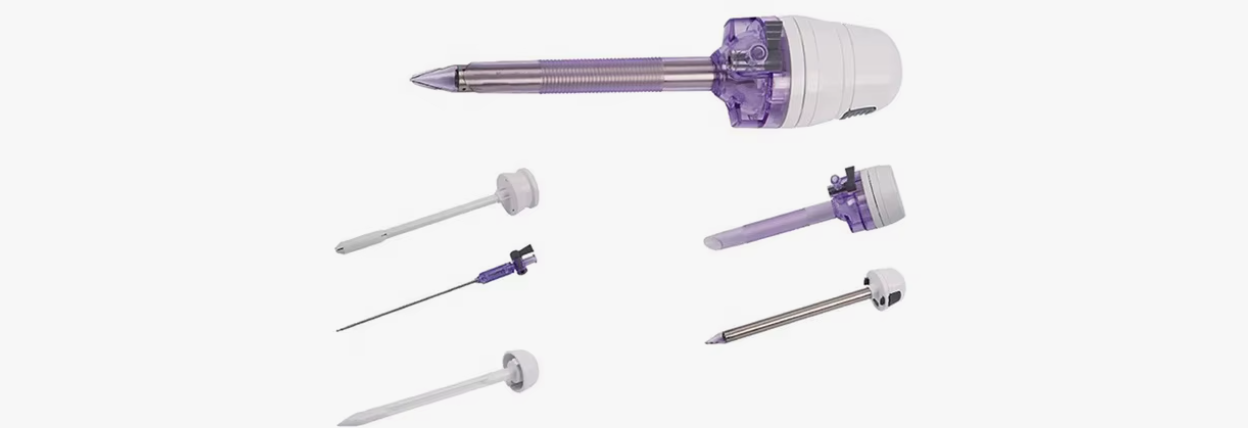
Laparoscopic surgery encompasses a wide variety of procedures, and different surgeries have different requirements for the number, diameter, and location of channels. Therefore, medical trocars typically come in various specifications and sizes to accommodate different surgical needs.
The following table summarizes the main roles of medical trocars in laparoscopic surgery:
| Application Stage | Specific Function | Clinical Significance |
| Abdominal Wall Puncture | Establish access to the abdominal cavity | Foundation for smooth surgical procedures |
| Gas Insufflation | Create and maintain pneumoperitoneum | Provide clear visualization and adequate working space |
| Instrument Passage | Allow insertion and removal of laparoscopes and surgical instruments | Improve surgical efficiency |
| Sealing Protection | Prevent gas leakage | Maintain stable intra-abdominal pressure |
| Trauma Reduction | Avoid repeated damage to the abdominal wall | Promote faster postoperative recovery |
Medical trocars play an indispensable role in laparoscopic surgery. They are not only responsible for establishing the abdominal cavity entry point, but also provide reliable support for pneumoperitoneum formation, improved surgical field of view, and instrument manipulation. It is precisely because of the rational application of medical trocars that laparoscopic surgery can truly achieve minimally invasive, efficient, and safe procedures, providing patients with a better treatment experience and faster recovery.
Related Products



If you are interested in our products, please consult us
CONTACT DETAILS
- Address : 116 Weihe Road, Rudong County Economic Development Zone, Nantong City, Jiangsu Province,China
- TEL: : +86-18362400158
- Email: : jayne@eraymedtech.com
PRODUCTS
NEWS CENTER
MOBILE TERMINAL
Copyright © 2025 Eray Medical Technology (Nantong) Co., Ltd.
All Rights Reserved. The information provided on this website is intended for use only in countries and jurisdictions outside of the People's Republic of China.
 Medical Devices Manufacturers
Medical Consumables Factory
Medical Devices Manufacturers
Medical Consumables Factory
 CONTACT US
