


 English
 Español
 Français
Home / News / Industry News / How to Wear a Face Mask Correctly: Fit, Orientation and Mask Standards
News


How to Wear a Face Mask Correctly: Fit, Orientation and Mask Standards
 2026.10.07
 Industry News
Watch ten people put on a procedure mask and you will usually spot the same three errors: the nose wire stays flat, the pleats point upward, and the bottom edge rests on the chin instead of under it. Fit-testing research keeps returning the same conclusion, that leakage around the edges rather than the filter material decides how well a mask actually performs.
Correct wear comes down to four habits: clean hands before and after touching the mask, the colored side facing out, coverage from the nose bridge to below the chin, and a nose wire molded with both index fingers.
Everything else, including wear time, double masking and what the numbers on the box mean, follows from those four.
Content
- 1 The 20-Second Fit Check
- 2 Blue Side, White Side, Pleats and the Nose Wire
- 3 Why Fit Beats Filter Rating
- 4 Surgical Mask, Respirator or Cloth Mask
- 5 What the Numbers on the Packaging Mean
- 6 Putting On and Taking Off Without Contaminating Yourself
- 7 Five Habits That Quietly Break the Seal
- 8 What Procurement and Infection-Control Teams Should Verify
- 9 Frequently Asked Questions
The 20-Second Fit Check
WHO, the CDC and hospital infection-control teams describe almost the same sequence, and it takes about 20 seconds once the mask is in your hand.
- Clean your hands with soap and water or an alcohol-based rub of at least 60% alcohol. Hands transfer contaminants to the inner surface, which then sits against your mouth and nose for hours.
- Hold the mask by the ear loops or top ties and confirm orientation: colored side out, pleats opening downward, stiff wire at the top.
- Place it over nose and mouth, then pull the bottom edge under the chin. A mask parked on the chin uncovers the mouth as soon as you speak.
- Press the nose wire on both sides of the bridge with your index fingers, working outward from the center. Pinching only the middle leaves gaps toward the inner corners of the eyes.
- Run a finger along the cheeks and jaw. If an edge lifts easily, tighten the ear loops or re-tie the ties.
- Do not touch the front of the mask while it is on. If you do, clean your hands again.
A printable field version of the same routine is available in our guide on how to wear disposable protective masks correctly.
Blue Side, White Side, Pleats and the Nose Wire
On a standard three-ply mask, the colored outer layer is the fluid-resistant one: it repels droplets and splashes. The white side faces the wearer because it absorbs moisture from breathing. Worn inside out, the mask still filters, but the absorbent layer faces the outside, so the mask becomes damp and uncomfortable much faster.
Single-color masks still have a right way up. Four features give it away:
- Pleats: on the outside, folds should open downward so the mask expands over the chin. Reversed pleats make it ride up and fog glasses.
- Nose wire: if the stiff strip sits on the bottom edge, the mask is upside down.
- Ties: knot the upper pair at the crown of the head and the lower pair at the nape of the neck.
- Ear loops: keep them flat and untwisted, since a twisted loop pulls the mask sideways and opens a gap at one cheek.
Exploded structure of a three-ply mask: the meltblown middle layer does the filtering, and the wire holds the top edge against the bridge.
That middle layer also explains why procedure masks are not washable. The meltblown polypropylene carries an electrostatic charge that captures small particles; water and detergent discharge it and collapse the fiber structure, so a washed mask looks intact but filters far less.
Why Fit Beats Filter Rating
Air follows the path of least resistance. Where a gap exists at the nose bridge or the cheeks, inhaled and exhaled air travels through the gap instead of the filter media, and the rated efficiency never comes into play. A high-rated mask that leaks at the edges can therefore protect the wearer less well than a lower-rated mask that sits closely.
The seal check for a tight-fitting respirator takes seconds: cup both hands over the mask and exhale gently, and no air should escape along the edges. Loose-fitting procedure masks are built mainly to contain the wearer's own droplets, but the same logic applies to coverage: nose to below the chin, no folding, no side gaps.
Illustrative trend based on published fit-testing findings; it shows direction and relative scale, not measured leakage values.
Two adjustments that published fit studies found useful for the public: knot the ear loops close to the mask edge and tuck the excess flat against the cheeks, or layer a well-fitting cloth mask over a procedure mask. Both improve the seal without changing the filter.
Surgical Mask, Respirator or Cloth Mask
The three families are built for different jobs, and a single number hides where each one wins.
Relative strengths based on the design intent of each type and on WHO and NIOSH guidance, not on measured filtration data.
- Medical procedure masks (ASTM F2100, EN 14683): single-use, fluid resistant, loose fitting. The default choice for patient care, food handling and general clinical work.
- Respirators (NIOSH N95, KN95, FFP2): designed to seal against the face and filter at least 95% of non-oil airborne particles. They require a seal check or fit test.
- Cloth masks: WHO recommends three layers, a water-repellent outer layer, a filter layer and an absorbent inner layer, for the general public where medical masks are not required. They are reusable but lose performance with washing.
For clinical and industrial buyers, that comparison becomes a purchasing decision: routine care calls for a three-ply mask that matches the filtration and fluid-resistance class of the department it will be used in.
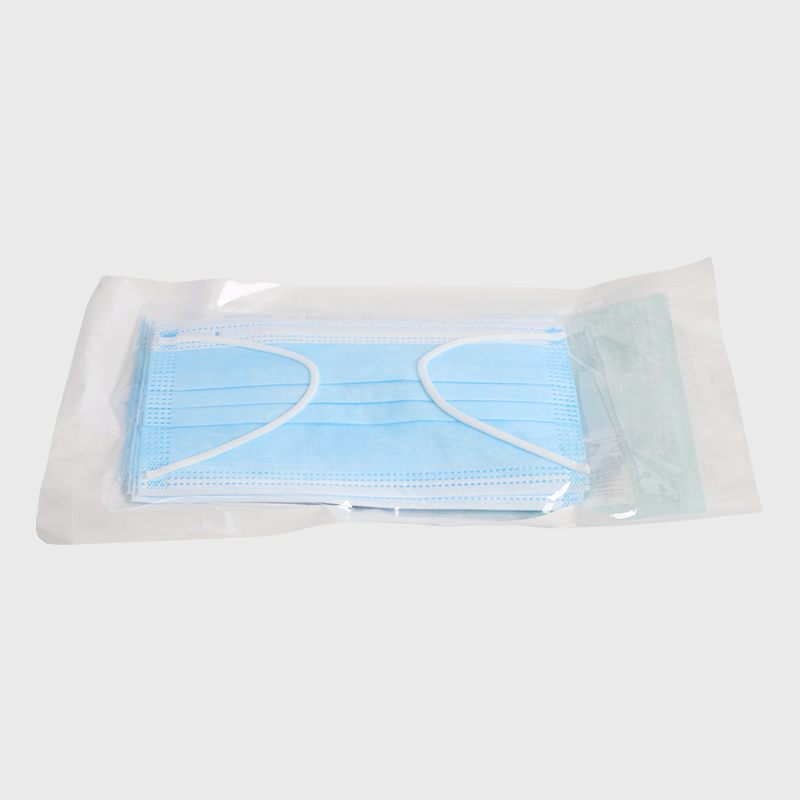 Disposable Medical Mask3Ply Face Mask The outer blue layer with water-blocking non-woven fabric prevents moisture and droplets from penetrating. The middle melt-blown cloth layer blocks bact...View Product →
What the Numbers on the Packaging Mean
Mask packaging carries abbreviations that look interchangeable but are not. ASTM F2100 is the US standard for medical face masks, EN 14683 is the European equivalent, and NIOSH 42 CFR 84 governs respirators. A product may be certified to one, two or all three.
| Standard | Class | Bacterial filtration | Particle filtration | Fluid resistance | Typical setting |
|---|---|---|---|---|---|
| ASTM F2100 | Level 1 | 95% or higher | 95% or higher | 80 mmHg | General care, low fluid exposure |
| ASTM F2100 | Level 2 | 98% or higher | 98% or higher | 120 mmHg | Surgery, moderate fluid exposure |
| ASTM F2100 | Level 3 | 98% or higher | 98% or higher | 160 mmHg | High-fluid procedures |
| EN 14683 | Type I | 95% or higher | Not specified | Not required | Patients, general public |
| EN 14683 | Type II | 98% or higher | Not specified | Not required | Clinical staff, wards |
| EN 14683 | Type IIR | 98% or higher | Not specified | Splash resistant | Surgical and theatre use |
| NIOSH 42 CFR 84 | N95 | Not applicable | 95% or higher (non-oil) | Optional | Fit-tested healthcare and industrial use |
Filtration classes are close together; fluid resistance is where the classes separate most clearly.
That gap explains why a Level 1 mask is not a substitute for a Level 3 mask in an operating theatre. Both filter well, but only one holds up when blood or irrigation fluid sprays toward the face.
Putting On and Taking Off Without Contaminating Yourself
Donning
- Clean hands, then check the mask for damage, stains or a bent nose wire.
- Hold it by the loops or ties with the colored side out and the wire up.
- Seat it over nose and mouth, then pull the bottom edge under the chin.
- Mold the wire along the bridge and check the cheek edges for gaps.
- Adjust the loops or re-tie until the mask stays in place when you turn your head.
Doffing
- Clean hands before removing the mask.
- Remove it by the ear loops or the lower tie only, without touching the front.
- Discard it into a closed waste bin. Procedure masks are single-use.
- Clean hands again after disposal.
- Never tuck a used mask into a pocket, hang it from one ear or leave it on a counter.
Hand hygiene before and after every touch is the step that is skipped most often, and it is the one that decides whether a correctly worn mask stays clean.
Five Habits That Quietly Break the Seal
- Wearing the mask under the nose. The nose is a main route for both inhaled and exhaled particles, so partial coverage gives partial protection at best.
- Resting it on the chin between conversations, which stretches the ear loops and leaves the mouth uncovered.
- Hanging it from one ear, which twists the loops and deforms the top edge.
- Touching the front while adjusting it, then touching a patient, a keyboard or your own face.
- Wearing the same mask for a full shift after it has become damp or soiled; filtration and breathability both drop.
None of these mistakes is unusual, and all of them are corrected by the same 20-second routine.
What Procurement and Infection-Control Teams Should Verify
For buyers, correct wear starts long before the end user opens the box. Four checks prevent most complaints:
- Batch-level test reports for bacterial and particle filtration, not just a certificate for the product family.
- The ASTM level or EN type matched to the department, with fluid resistance confirmed for theatre use.
- Nose wire malleability and ear loop tensile strength, tested on samples from the production lot.
- Packaging format, expiry dating and storage conditions, especially for individually wrapped masks.
Filtration minimums a supplier's test report should demonstrate for each class.
Eray Medical Technology (Nantong) Co., LTD., is a medical device manufacturing enterprise integrating research and development, production, and sales. The company is located in Rudong Economic Development Zone, adjacent to Shanghai, with convenient transportation, and developed information. As a professional medical devices manufacturer and medical consumables factory, the company covers an area of 70 mu, with a construction area of 20,310 square meters. It has an ISO Class 8 cleanroom, an ISO Class 7 microbiological laboratory, and a partial ISO Class 6 physical and chemical laboratory. Eray has established a comprehensive quality control system that encompasses the entire production process, including testing and traceability, from the ISO Class 8 cleanroom to a partial ISO Class 6 physical and chemical laboratory, ensuring that every customer receives trustworthy products.
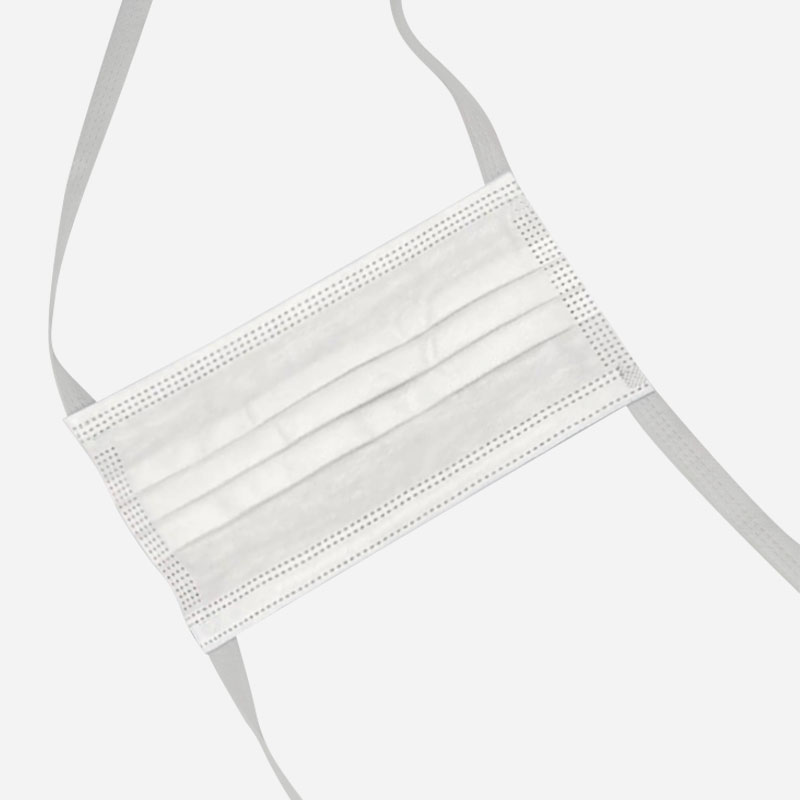 Disposable Biodegradable Medical Mask3Ply Face Mask The outer blue layer with water-blocking non-woven fabric prevents moisture and droplets from penetrating. The middle melt-blown cloth layer blocks bact...View Product →
Masks produced in a controlled cleanroom environment, such as the disposable and biodegradable medical masks in the Eray range, are supported by ISO 13485 quality management, with CE certification and FDA registration available for a number of products. Distributors and hospital buyers can request test reports, samples and packaging specifications through our contact page.
Frequently Asked Questions
Q1. Does the blue side go on the outside?
On standard three-ply masks, yes. The colored layer is the fluid-resistant outer layer and the white layer sits against the face. If both sides are white, use the pleats and the nose wire to find the top and the outside.
Q2. How long can one disposable mask be worn?
Procedure masks are single-use. Replace the mask as soon as it becomes damp, soiled or damaged, and between patient contacts in clinical settings. Follow your facility's written policy for maximum continuous wear time.
Q3. Can I wear a mask if I have a beard?
Facial hair at the sealing surface prevents a tight fit, and NIOSH states that tight-fitting respirators cannot be used where hair crosses the seal. A loose-fitting procedure mask still provides source control, but with a reduced seal.
Q4. Is it acceptable to pull the mask below my nose?
No. The nose is a primary route for both inhaling and exhaling particles, and most infection-control policies treat a mask worn under the nose or on the chin as not worn at all.
Q5. Should I double mask or knot the ear loops?
Both are fit-improvement techniques studied in published research. Knotting the ear loops and tucking the sides, or layering a cloth mask over a procedure mask, improved fit and filtration. They are optional additions to correct wear.
Q6. Can a disposable mask be washed and reused?
No. Washing discharges the electrostatic charge on the meltblown filter layer and deforms the nose wire and pleats. The mask may look undamaged but will filter considerably less.
Related Products
If you are interested in our products, please consult us
CONTACT DETAILS
- Address : 116 Weihe Road, Rudong County Economic Development Zone, Nantong City, Jiangsu Province,China
- TEL: : +86-18362400158
- Email: : jayne@eraymedtech.com
PRODUCTS
NEWS CENTER
MOBILE TERMINAL
Copyright © 2025 Eray Medical Technology (Nantong) Co., Ltd.
All Rights Reserved. The information provided on this website is intended for use only in countries and jurisdictions outside of the People's Republic of China.
 Medical Devices Manufacturers
Medical Consumables Factory
Medical Devices Manufacturers
Medical Consumables Factory
 CONTACT US
