


 English
 Español
 Français
Home / News / Industry News / Face Mask When Sick: How Masks Reduce Virus Transmission and Protect Others
News


Face Mask When Sick: How Masks Reduce Virus Transmission and Protect Others
 2026.09.23
 Industry News
It starts with a raw throat and a thermometer that will not stop climbing. Whether it is a cold, the flu, or another respiratory virus, the moment you feel sick you face a small but important decision: should you wear a face mask when sick, especially if you need to leave the house or share space with your family?
The evidence-based answer is yes. A mask will not cure you and it is not a substitute for rest, fluids, or medical care, but it does something simple and valuable: it blocks the infected droplets you release when you breathe, talk, cough, or sneeze. The U.S. CDC states the point directly: when worn by a person with an infection, masks reduce the spread of the virus to others. This source-control effect is why hospitals still ask symptomatic staff and visitors to mask, and why wearing one remains the most practical courtesy during respiratory illness season.
Content
- 1 Why wearing a face mask when you are sick works
- 2 When you are sick, how long should you keep masking?
- 3 Which face mask should you choose when you are sick?
- 4 How to put on, wear, and replace your mask
- 5 Why manufacturing quality matters when you are sick
- 6 Frequently asked questions about face masks when sick
Why wearing a face mask when you are sick works
When you are ill, every exhalation carries virus-laden particles in different sizes. Larger droplets fall onto surfaces within one to two meters, while smaller aerosol particles and droplets stay suspended in the air and can be inhaled by someone nearby. A well-fitted face mask captures the majority of these particles at the source, before they leave your personal space. A peer-reviewed study of close-up, face-to-face interactions found that a mask significantly reduces the number of cough and sneeze droplets that reach another person, which lowers the viral dose that person is exposed to. A lower dose gives the other person's immune system a much better chance of fighting the infection off.
Fig. 1 — An unmasked cough releases droplets that travel toward other people; a mask holds most of them at the source. Isometric illustration.
When you are sick, how long should you keep masking?
Respiratory viruses are usually contagious one to two days before symptoms appear and are most easily spread during the first days of illness, when viral loads are highest. The CDC's respiratory virus guidance advises staying home while you have a fever and symptoms, and then taking added precautions, including wearing a mask indoors, for the five days after you return to normal activities. In the same spirit, the California Department of Public Health recommends masking when you have tested positive for a respiratory virus, no matter how mild the symptoms are.
Fig. 2 — A typical contagious window when you have a respiratory virus. Fever and severe symptoms can lengthen the period.
In practice, wear a face mask when sick in these situations:
- Whenever you must leave the house while symptoms are present.
- If you test positive for a respiratory virus, even with mild symptoms.
- When you share a home with someone who is elderly, pregnant, or chronically ill.
- In crowded indoor places such as buses, trains, clinics, pharmacies, and supermarkets.
Which face mask should you choose when you are sick?
The best mask is one you will actually keep on, that fits your face, and that offers a reasonable filtration layer. For an adult with a cold or flu, a disposable medical mask is the practical default: it is light, breathable, widely available, and designed for single use. If you will be in a high-risk setting or caring for a vulnerable person, a respirator such as KN95, KF94, or N95 provides better fit and higher filtration.
| Mask type | Filtration layer | Fit | Best use when sick |
|---|---|---|---|
| Cloth mask | Variable, often thin | Loose around edges | Low-risk casual settings, short errands |
| Disposable medical mask (surgical) | Three-layer nonwoven, fluid-resistant | Covers nose, mouth, and chin | Day-to-day baseline during illness |
| KN95 / KF94 | Electret filter layer | Tight with nose wire and ear loops | Public transport, clinics, crowded rooms |
| N95 / FFP2 respirator | High-efficiency filter | Seals around the face | Caring for vulnerable people at home |
Fig. 3 — Mask categories ranked by protection tier when worn correctly. Fit quality matters as much as the filter layer.
Whichever type you choose, check that it sits snugly over your nose and chin. A mask worn under the nose, or with a visible side gap, performs far below its intended level.
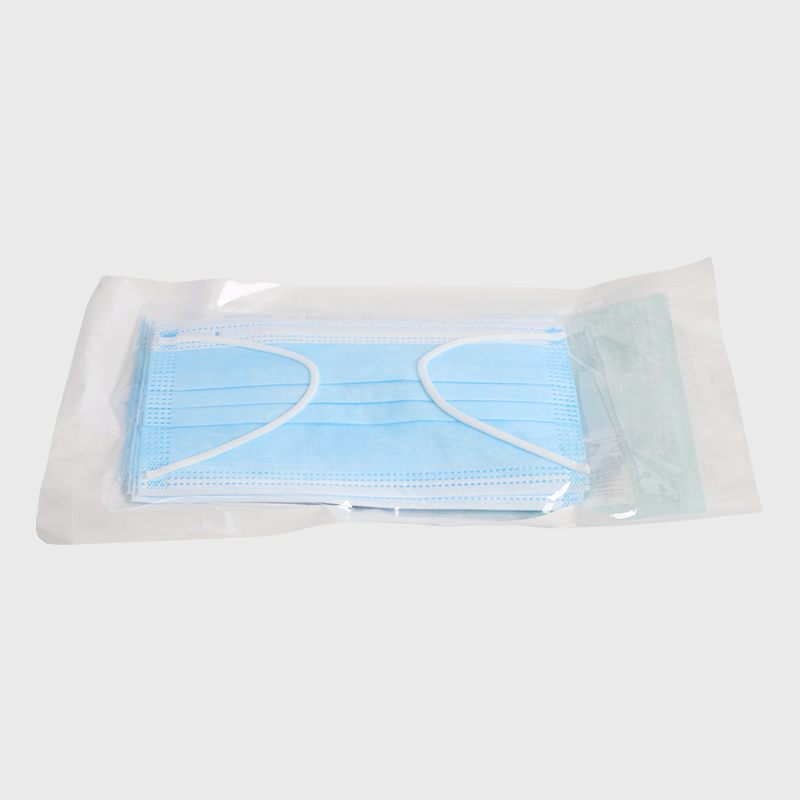 Disposable Medical Mask with Three-Layer Filtration and Adjustable Nose ClipThis standard medical mask uses a water-repellent outer layer, melt-blown middle layer, and soft inner layer for comfort. Its adjustable nose clip and elastic ear loops help achieve the snug fit emphasized in the surrounding text.View Product →
How to put on, wear, and replace your mask
A good mask fails if you wear it wrong. Follow this sequence every time:
- Wash or sanitize your hands before touching the mask.
- Place the mask over your nose, mouth, and chin, with the colored side facing out.
- Pinch the nose strip so the mask follows the shape of your nose.
- Pull the lower edge under your chin and check for gaps on both cheeks.
- Remove the mask by the ear loops or ties, without touching the front.
- Throw a single-use mask into the waste bin immediately after removal.
Disposable medical masks are designed for one session. Replace the mask when it feels damp, becomes visibly soiled, or after you have coughed or sneezed heavily into it. During a full day of illness, carry a spare in your pocket or bag. For a detailed look at wear time and replacement signals, read our guide on how long a disposable mask can be worn safely.
Replacing masks frequently while sick also means more waste. If you go through several disposable masks a day, choosing a biodegradable disposable medical mask keeps the same three-layer barrier function while reducing the environmental footprint of your illness.
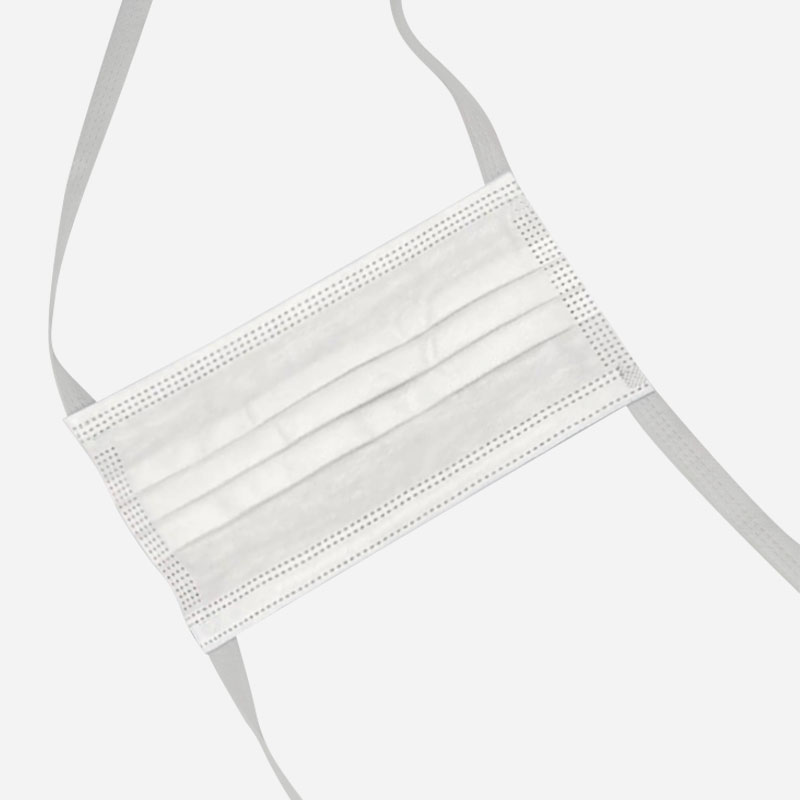 Biodegradable Disposable Medical Mask with Reduced Plastic WasteMade from certified biodegradable materials, this mask retains the same three-layer barrier and BFE 95% filtration while cutting plastic waste. It suits users replacing masks frequently and looking to lessen environmental impact.View Product →
Why manufacturing quality matters when you are sick
The protection a mask provides is only as reliable as the factory that makes it. Filtration layers, nose-wire strength, ear-loop tension, and cleanroom conditions all influence whether a mask consistently blocks droplets. This is why hospitals and distributors verify their suppliers' certifications before ordering.
Eray Medical Technology (Nantong) Co., Ltd. is a medical device manufacturing enterprise integrating research and development, production, and sales. The company is located in Rudong Economic Development Zone, adjacent to Shanghai, with convenient transportation and well-developed information infrastructure. As a professional medical device manufacturer and medical consumables factory, the company covers an area of 70 mu, with a construction area of 20,310 square meters. It operates an ISO Class 8 cleanroom, an ISO Class 7 microbiological laboratory, and a partial ISO Class 6 physical and chemical laboratory. Eray has established a comprehensive quality control system that encompasses the entire production process, including testing and traceability, from the ISO Class 8 cleanroom to the ISO Class 7 and Class 6 laboratories, ensuring that every customer receives trustworthy products.
For sourcing teams and distributors, that level of control translates into consistent batches and reliable test documentation. You can reach the Eray team directly through their contact page for specifications, samples, and compliance files.
Frequently asked questions about face masks when sick
Q1. Should I wear a mask at home when I am sick?
Yes, especially in shared spaces such as the kitchen, living room, and bathroom. Masking at home matters most when a family member is elderly, pregnant, or has a chronic condition. You can remove it while alone in a closed room.
Q2. Does wearing a mask make my cold or flu last longer?
No. A mask filters the droplets leaving your mouth; it does not trap air, raise carbon dioxide levels, or weaken your immune response. Disposable medical masks use breathable nonwoven layers, so they do not slow your recovery.
Q3. How often should I change my mask while sick?
Change it as soon as it becomes damp, soiled, or hard to breathe through, and after heavy coughing or sneezing. For continuous wear, keep a fresh disposable mask ready every few hours.
Q4. Can I reuse a disposable medical mask the next day?
Single-use masks are intended for one session. The outer layer can carry pathogens and the inner layer has absorbed droplets, so storing and re-wearing a used mask increases contamination risk. Discard it after each use.
Related Products

If you are interested in our products, please consult us
CONTACT DETAILS
- Address : 116 Weihe Road, Rudong County Economic Development Zone, Nantong City, Jiangsu Province,China
- TEL: : +86-18362400158
- Email: : jayne@eraymedtech.com
PRODUCTS
NEWS CENTER
MOBILE TERMINAL
Copyright © 2025 Eray Medical Technology (Nantong) Co., Ltd.
All Rights Reserved. The information provided on this website is intended for use only in countries and jurisdictions outside of the People's Republic of China.
 Medical Devices Manufacturers
Medical Consumables Factory
Medical Devices Manufacturers
Medical Consumables Factory
 CONTACT US
