


 English
 Español
 Français
Home / News / Industry News / Can You Spread the Flu If You Wear a Mask? Evidence, Facts, and Practical Guidance
News


Can You Spread the Flu If You Wear a Mask? Evidence, Facts, and Practical Guidance
 2026.09.09
 Industry News
Imagine you wake up with a sore throat and a fever. You have influenza, and you need to see a doctor or stay at home with your family. The first question that comes to mind is: “If I put on a mask, will I still spread the flu?” The answer is: a correctly worn mask does reduce the amount of virus you release, but it is not a perfect shield. The reduction depends on the mask type, how tightly it fits, when you put it on, and whether you remember to clean your hands.
Public health agencies like the CDC consistently recommend masks as part of a layered strategy for people who have a respiratory virus. In practice, the evidence shows that a person who has the flu and wears a well-fitted surgical or medical mask can dramatically lower the number of infectious droplets and aerosols that escape into the air. But gaps remain, especially around the edges of the mask. That is why you should still treat the mask as one tool, not a magic button.
This article is a fact-based walkthrough of what actually happens when you mask while infected with influenza. You will find out where the mask helps, where it fails, and how to make the most of it in real-world situations.
Content
How the Flu Actually Spreads
Influenza moves from one person to another through three main routes: droplets, aerosols, and direct contact. Droplets are large respiratory particles that travel short distances, usually under two metres, when you cough or sneeze. Aerosols are much smaller, stay in the air for minutes to hours, and can travel farther. Contact transmission happens when your hand touches a contaminated surface and then touches your nose, mouth, or eyes.
When you are infected, every cough and even normal breathing pushes virus-laden material into the air. The larger droplets are easier to block with a mask, while tiny aerosols are more challenging because they can slip through gaps around a loose mask. According to a 2020 study published in Risk Analysis, mask use is “virtually the only way” to prevent aerosol transmission, but the mask’s efficiency is strongly influenced by fit and the type of material.
most masks
If you wear a mask, you intercept some of those droplets at the source. You also reduce the amount of contaminated respiratory material that settles on nearby surfaces. In household settings, when one person has the flu, asking them to wear a mask in common areas has been shown in observational studies to lower the chance of other family members becoming ill. However, being in a small room for hours with poor air circulation can still increase risk, especially if the mask is removed for eating or sleeping.
Why a Mask Lowers Your Viral Output
A mask works as a physical barrier at the point of release. When you breathe out through a medical-grade mask, the inner layers trap a large proportion of respiratory droplets. The mask’s middle layer, typically melt-blown polypropylene, filters particles through mechanical interception and electrostatic attraction. This is the same principle that gives surgical and medical masks their filtration ability.
Critically, a mask is only as good as its fit. If the mask sits loosely with visible gaps along the nose or cheeks, exhaled air will take the path of least resistance and escape through those gaps instead of through the filter. Therefore, a well-fitted medical mask, such as one with a nose wire and ear loops that create a seal, will perform much closer to its laboratory rating than a sloppy one.
In one real-world study conducted during the 2009 H1N1 pandemic, researchers found that people who wore masks while ill had significantly fewer flu viruses in their exhaled breath compared with those who did not mask. While this evidence is still evolving, the direction is clear: the mask reduces viral shedding from the wearer. It does not eliminate the virus entirely, but it does cut the load that your family, co-workers, or patients receive.
For a medical device manufacturer like Eray Medical Technology (Nantong) Co., Ltd., the quality of the mask matters. The company runs an ISO Class 8 cleanroom to produce disposable medical masks, and it uses an ISO Class 7 microbiological laboratory to check the filtration and bacterial performance. This kind of controlled manufacturing environment helps deliver a mask that actually does what the label claims. Eray Medical Technology (Nantong) Co., Ltd. is a medical device manufacturing enterprise integrating research and development, production, and sales. Located in Rudong Economic Development Zone, adjacent to Shanghai, the facility covers 70 mu and has a construction area of 20,310 square metres. It has established a comprehensive quality control system covering the entire production process, including testing and traceability from the ISO Class 8 cleanroom to the partial ISO Class 6 physical and chemical laboratory.
Mask Type, Fit, and When to Wear It
When you are sick with influenza, not all masks are equal. A medical surgical mask is designed to be worn by a patient to reduce the spread of droplets. A disposable medical mask offers similar basic protection for source control. A high-filtration respirator such as an N95 will block more aerosols, but it is usually reserved for healthcare workers, and it can be uncomfortable for long periods if you are already ill.
| Mask type | Main purpose | Typical filter performance | Comfort for a sick user |
|---|---|---|---|
| Disposable medical mask | Source control in public or shared indoor spaces | ≥95% bacterial filtration efficiency | Moderate – mainly for shorter periods |
| Medical surgical mask | Higher filtration of droplets and some aerosols | ≥95% bacterial filtration, ≥30% particle filtration | Moderate – good for daily outings |
| N95 / KN95 respirator | Best source and exposure control for aerosols | ≥95% particle filtration | Lower – may feel tight and warm |
The ideal time to wear a mask is the moment you first feel respiratory symptoms. If you wait until you have a full-blown cough, you have already released many particles. If you are caring for a sick family member, wearing a mask yourself also provides a layer of protection, but the sick person should mask first—it is the sick person’s mask that reduces the total virus in the room.
After you recover, you can continue to wear a mask for a few days, especially around vulnerable people. The CDC recommends that people who have a respiratory virus should still mask in public settings for at least five days after symptoms start, and longer if they continue to have symptoms. This is a source-control approach, and it matters most in healthcare facilities, pharmacies, nurseries, and other places with high-risk individuals.
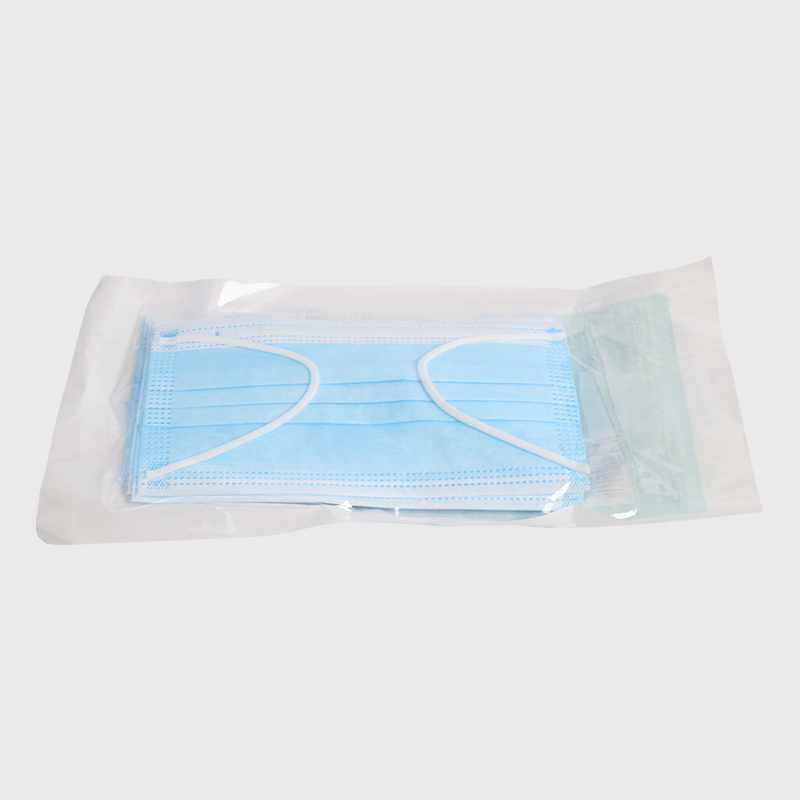
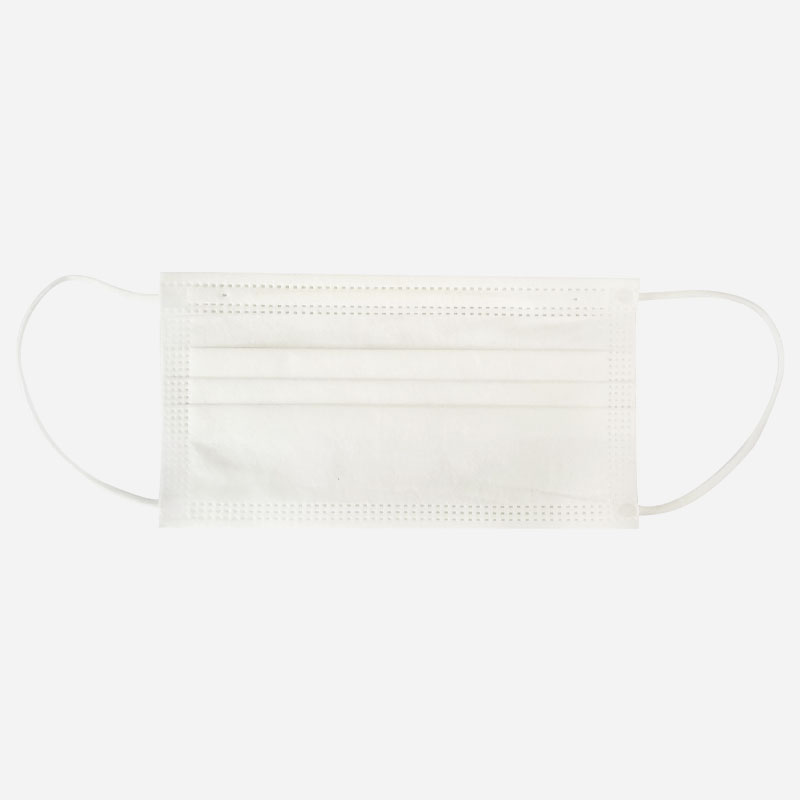
If you want a dependable option for your own flu season reserves, the disposable medical mask from Eray is a practical choice for routine source control. For those who prefer an eco-friendlier option, the disposable biodegradable medical mask reduces the environmental footprint. Both masks are produced in an ISO Class 8 cleanroom, and they go through microbial testing in an ISO Class 7 laboratory before leaving the factory.
Common Misconceptions About Masks and Flu
“I wear a mask, so I am fully protected.”
No. A mask lowers your viral output, but it does not make you a sealed container. If you sneeze forcefully, some droplets and aerosols will escape around the edges. This is why a mask has to be paired with hand hygiene, physical distancing, and good ventilation.
“Masks make the air unhealthy to breathe.”
For most people, masks do not restrict oxygen or trap carbon dioxide. They simply add a filter layer that you breathe through. If you feel dizzy or nauseous, it is usually because you are breathing faster, dehydrated, or emotionally stressed, not because the mask changed your blood chemistry. Take breaks in a safe outdoor area if needed.
“The type of mask does not matter.”
It does. A cloth mask is useful for blocking large droplets, but its particle filtration is much less consistent than that of a medical mask. If you have confirmed influenza, a medical or surgical mask is significantly better at reducing the virus you release.
Why a Trusted Mask Manufacturer Matters
When you are already sick, the last thing you want is to question whether your mask is reliable. Eray Medical Technology (Nantong) Co., Ltd. has been making masks and other single-use medical devices since 2013. The company covers an area of 70 mu and has a construction area of 20,310 square metres, with an ISO Class 8 cleanroom, an ISO Class 7 microbiological laboratory, and a partial ISO Class 6 physical and chemical laboratory. The quality system extends from raw material receipt to final packaging and traceability, so each batch of masks can be followed back to its production record.
Eray is not just a mask company; it also supplies wound dressings, nebulizers, nasal oxygen tubes, and CSSD equipment. That broader knowledge of sterile processing helps the team understand how masks fit into infection prevention as a whole. For a hospital or distributor, working with a manufacturer that has gone through ISO 13485 certification and CE/FDA registrations for selected products adds a layer of confidence that the mask on the shelf will perform as expected.
Frequently Asked Questions
Q1: Can I still spread the flu if I wear a mask indoors?
Yes, you can. The mask reduces the amount of virus you exhale, but it does not eliminate it. Spaces with poor ventilation and close contact with others for long periods still carry a meaningful risk.
Q2: Should I wear a mask even if I do not have symptoms?
If you have been exposed to the flu and are testing negative, wearing a mask adds an extra layer of caution. It is especially helpful when you need to be around people who may be more vulnerable.
Q3: How often should I change the mask if I am sick?
Change it every 4 to 6 hours, or as soon as it becomes damp, torn, or visibly soiled. A wet mask loses filtration efficiency and should be replaced immediately.
Q4: Is it safe to reuse a disposable medical mask during a single flu episode?
No. Disposable masks are one-use items. Reusing a medical mask can contaminate the outer surface and increase the chance of contact transmission. Use a fresh mask every time.
Related Products

If you are interested in our products, please consult us
CONTACT DETAILS
- Address : 116 Weihe Road, Rudong County Economic Development Zone, Nantong City, Jiangsu Province,China
- TEL: : +86-18362400158
- Email: : jayne@eraymedtech.com
PRODUCTS
NEWS CENTER
MOBILE TERMINAL
Copyright © 2025 Eray Medical Technology (Nantong) Co., Ltd.
All Rights Reserved. The information provided on this website is intended for use only in countries and jurisdictions outside of the People's Republic of China.
 Medical Devices Manufacturers
Medical Consumables Factory
Medical Devices Manufacturers
Medical Consumables Factory
 CONTACT US
